B. Number · Number Sense: Numbers to 200 and FractionsFair Sharing: Whole Numbers and Leftovers
B1.6About 35 minutes
Learning goals- I can share up to 10 things fairly among 2, 3, 4 or 6 people.
- I can draw a picture to show a fair share.
- I can cut leftovers into equal parts so everyone gets the same.
- I can name a share like "2 and a half" (a mixed number).
Words to know
fair share
When everyone gets the same amount.
sharers
The people (or animals!) who are sharing.
leftover
What is left after everyone gets the same number of whole things.
mixed number
A whole number and a fraction together, like 2 and a half.
equal parts
Parts that are all the same size.
Pancake breakfast
It's Saturday morning. Grandpa made 5 pancakes. You and your sister want a fair share. That means you both get the same amount.
You each get 2 pancakes. But there is 1 pancake left over! What should you do?
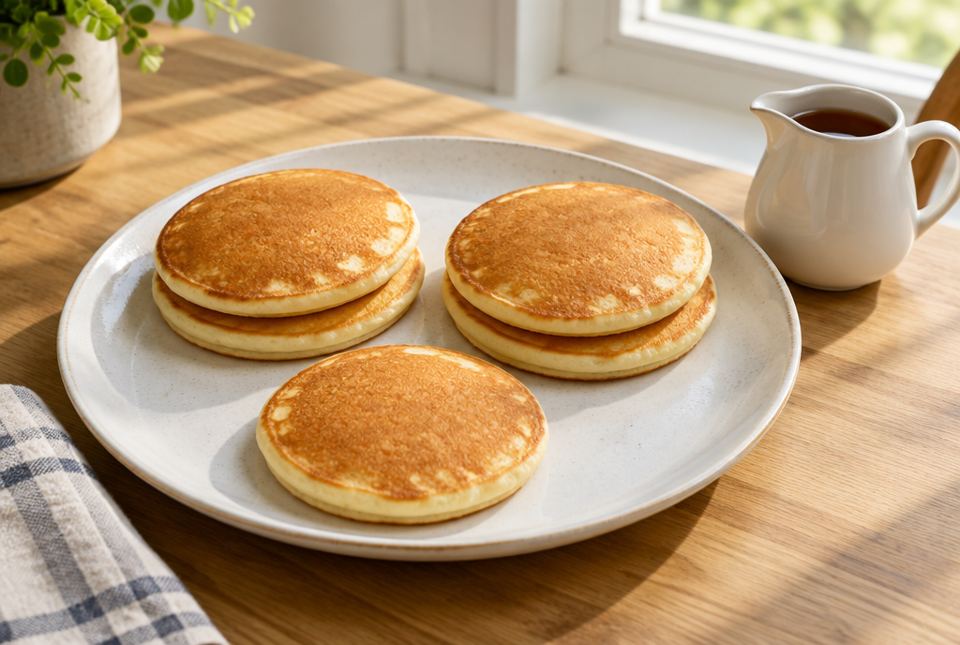 Five pancakes shared fairly between 2 people: each stack of 2 is one share, and 1 pancake is left over. Cutting it in half gives each person 2 and a half pancakes. AI-generated image
Remember from Grade 1
In Grade 1 you shared things fairly by dealing them out one at a time: one for you, one for me. You also cut a whole into halves and fourths.
This year you will share up to 10 things among 2, 3, 4 or 6 sharers. And you'll find out what to do with leftovers.
Step 1: Share the whole things
Deal out whole things one at a time until there aren't enough for everyone to get another one.
Sometimes there are no leftovers. For example, 6 apples shared among 3 friends: each friend gets 2 apples. Nothing is left.
🍎🍎🍎🍎🍎🍎
6 apples shared among 3 friends: 2 each, nothing left over.Step 2: Cut the leftovers into equal parts
If something can be cut (like a pancake, a sandwich or a granola bar), cut each leftover into as many equal parts as there are sharers.
- 2 sharers: cut into halves
- 3 sharers: cut into thirds
- 4 sharers: cut into fourths
- 6 sharers: cut into sixths
Then give each sharer one part.
Each person gets 2 whole pancakes and a half. We say "2 and a half".
A number like 2 and a half is called a mixed number. It has a whole number part (2) and a fraction part (a half).
Worked exampleExample 1: Pancakes for two
Share 5 pancakes fairly between 2 children.
- Deal out whole pancakes: 1 each, 2 each. That uses 4 pancakes.
- 1 pancake is left over. There are 2 sharers, so cut it into 2 halves.
- Each child gets one half.
Each child gets 2 and a half pancakes.
Worked exampleExample 2: Granola bars for three
Share 7 granola bars fairly among 3 friends.
- Deal out whole bars: 1 each (3 used), 2 each (6 used).
- 1 bar is left over. There are 3 sharers, so cut it into 3 equal parts: thirds.
- Each friend gets one third.
Each friend gets 2 and one third granola bars.
7 granola bars among 3 friends. Each friend gets 2 whole bars and one third of the last bar.Worked exampleExample 3: Sandwiches for four
Share 10 sandwiches fairly among 4 people.
- Deal out whole sandwiches: 1 each (4 used), 2 each (8 used).
- 2 sandwiches are left. Can each person get another whole one? No, there are only 2.
- Cut each leftover sandwich into halves. That makes 4 halves, one for each person.
Each person gets 2 and a half sandwiches.
Can it be cut?
Only cut leftovers that can be cut fairly, like food or paper. If you are sharing marbles, toy cars or crayons, you can't cut them! Then the leftovers just stay left over (or you put them away for later).
Just for funWhat if Grandpa's dog wanted a fair share of the 5 pancakes too? Now there are 3 sharers, so each gets 1 and two thirds. The dog would say thanks, then ask why it can't have the whole stack.
Hands-on activityTeddy bear picnic
You need: 3 to 6 stuffed animals or toys, some paper plates, and things to share. Use crackers, slices of bread, or paper circles you cut out as pretend pancakes.
- Put out 2 toys and 5 "pancakes". Share them fairly. Cut the leftover.
- Now try 3 toys and 7 crackers.
- Then try 6 toys and 9 paper pancakes.
- After each one, draw a picture of the plates and say how much each toy got.
Math talk: "How did you decide how to cut the leftovers?"
Your turn
1Share 8 cookies among 4 friends. How many does each friend get?
2 cookies each. 4 + 4 = 8, nothing left.
2Share 3 sandwiches between 2 people. How much does each get?
1 and a half sandwiches. 1 each, then cut the last one into halves.
3Share 7 pancakes between 2 people.
3 and a half pancakes each. 3 each uses 6, then cut the last one in half.
4Share 4 pizzas among 3 people.
1 and one third pizzas each. 1 each uses 3, then cut the last pizza into thirds.
5Share 9 apples among 3 friends.
3 apples each. No leftovers.
6Share 5 granola bars among 4 kids.
1 and one fourth bars each. 1 each uses 4, then cut the last bar into fourths.
7Draw a picture to show 3 muffins shared between 2 children. (Tell what you drew.)
Look for: 3 muffins, one for each child, and the third muffin cut into 2 equal halves, one half for each child. Each child gets 1 and a half muffins.
More practice: warm-up
1Share 6 crackers between 2 friends.
2Share 10 grapes between 2 friends.
3Share 6 oranges among 6 children.
4If 4 people share, what equal parts do you cut a leftover into?
5If 3 people share, what equal parts do you cut a leftover into?
More practice: on your own
1Share 9 pancakes between 2 people.
4 and a half each. 4 each uses 8; cut the last one into halves.
2Share 10 granola bars among 3 kids.
3 and one third each. 3 each uses 9; cut the last bar into thirds.
3Share 7 marbles between 2 kids. Can you cut the leftover?
Each kid gets 3 marbles and 1 is left over. You can't cut a marble, so it stays left over.
4Share 7 sandwiches among 6 people.
1 and one sixth each. 1 each uses 6; cut the last sandwich into 6 equal parts (sixths).
5Liam shares 5 pizzas between 2 people. He says each gets 2 pizzas and 1 is left over. Is that a fair share? What should he do?
It's not finished. He should cut the leftover pizza into halves so each person gets 2 and a half pizzas. Then nothing is left over.
Challenge
1Share 9 sandwiches among 6 people.
1 and a half each. 1 each uses 6, and 3 are left. Cut each leftover sandwich in half: 6 halves, one for each person.
2Share 10 crackers among 4 friends. Explain how you would draw it.
Each friend gets 2 and a half crackers. Deal 2 each (8 crackers). Cut each of the 2 leftover crackers into halves. That makes 4 halves: one for each friend.
36 friends share 8 granola bars. Each gets 1 whole bar. There are 2 left over. One idea: cut each leftover bar into 3 equal parts. Does that make a fair share? How much does each friend get?
Yes. 2 bars cut into 3 parts each make 6 thirds: 3 + 3 = 6, one for each friend. Each friend gets 1 and one third bars.
Quiz
1. What does a fair share mean?
2. Share 6 muffins among 3 children. How many does each get?
3. Share 5 pancakes between 2 people. How much does each get?
4. 4 people share and there is 1 sandwich left. How should you cut it?
6. Share 7 sandwiches among 3 friends. How much does each friend get?
Big idea: To share fairly, first deal out whole things. If something is left over and can be cut, cut each leftover into as many equal parts as there are sharers. The answer is often a mixed number like "2 and a half".
Common difficulties:
- Stopping at the leftovers ("2 each and 1 left") when the item can be cut. Ask, "Is it fair? Can we make it fair?"
- Cutting into the wrong number of parts (cutting into halves when 3 people share). Ask, "How many people need a piece?"
- Unequal pieces. Remind your child that the parts must be the same size.
Grade 2 language: At this grade, children name fractions in words ("one third", "2 and a half"). Writing fractions with numbers comes later.
How to help: Share real food at snack time: sandwiches, crackers, tortillas, granola bars. Ask your child to plan the fair share before cutting.