Strand A: Foundations of Language and Mathematics · Numbers and CountingCounting in Order
A6.2 A6.8About 20 minutes
Learning goals- I can say the counting numbers in the right order.
- I can count to 10, then to 20, and to 30 with help.
- I can start counting from any number up to 20, like 13, and keep going.
- I know that when I count forward, the numbers get bigger.
Words to know
count
Say the numbers in order: 1, 2, 3, 4, 5 …
number
A word or sign that tells how many, like three or 3.
after
The number that comes next when we count. After 4 comes 5.
before
The number that comes just ahead. Before 4 comes 3.
Let's sing!
Grown-up: read this part aloud and sing together.
"1, 2, 3, 4, 5, once I caught a fish alive. 6, 7, 8, 9, 10, then I let it go again!"
You just counted to 10! Let's count the fish together. Point to each one.
🐟🐟🐟🐟🐟🐟🐟🐟🐟🐟
Ten fish. Point and count: 1, 2, 3, 4, 5, 6, 7, 8, 9, 10.Numbers have an order
Counting numbers always come in the same order. Every time. Like the words in a song.
1, 2, 3, 4, 5, 6, 7, 8, 9, 10.
If we skip a number, or mix them up, our counting will not be right.
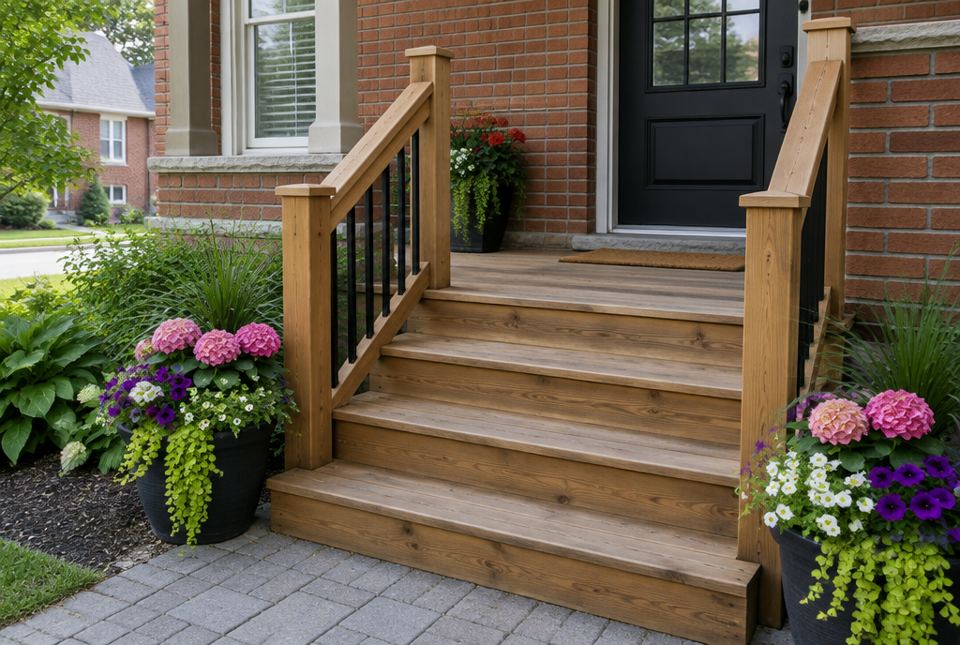 Count the steps as you climb: 1, 2, 3, 4... We always say the numbers in the same order. AI-generated imageThe numbers in order from 0 to 10. Each step to the right is one more.
Counting forward makes numbers bigger
Each time we count forward, the number gets one bigger. 2 is more than 1. 3 is more than 2. 10 is more than all of them!
When we count back, like 5, 4, 3, 2, 1, the numbers get smaller.
Worked exampleLet's count the stairs
We are climbing 10 stairs. Let's count each stair as we step.
- Put one foot on the first stair. Say 1.
- Next stair: 2. Next: 3. Keep going: 4, 5, 6, 7, 8, 9.
- Top stair: 10! We are up high.
- Each stair gave us one more number. The numbers got bigger as we went up.
We counted 1 to 10, one number for each stair.
Worked exampleLet's start in the middle
We don't always have to start at 1. Let's start at 4 and count to 8.
- Say 4 in a big voice.
- What comes after 4? 5.
- Keep going: 6, 7, 8.
- Stop at 8.
4, 5, 6, 7, 8. We counted on from 4.
Worked exampleRocket blast-off: counting back
Let's crouch down like a rocket and count back from 10.
- Start at 10.
- Count back one at a time: 9, 8, 7, 6, 5, 4, 3, 2, 1.
- Shout Blast off! and jump up high.
- Counting back, the numbers got smaller.
10, 9, 8, 7, 6, 5, 4, 3, 2, 1, blast off!
Counting past 10
After 10 we keep going. Look at the chart. Each row starts a new set of numbers. Point to each number as you say it.
| 1 | 2 | 3 | 4 | 5 | 6 | 7 | 8 | 9 | 10 |
|---|
| 11 | 12 | 13 | 14 | 15 | 16 | 17 | 18 | 19 | 20 |
| 21 | 22 | 23 | 24 | 25 | 26 | 27 | 28 | 29 | 30 |
Worked exampleLet's start at 13
Start at 13 and count to 20. Point to the chart as you go.
- Find 13 on the chart. Say thirteen in a big voice.
- What comes next? 14.
- Keep going: 15, 16, 17, 18, 19.
- Stop at 20. Twenty!
13, 14, 15, 16, 17, 18, 19, 20. We started in the middle and counted on to 20.
Tricky numbers
Some numbers are tricky to say:
- 11 is "eleven" and 12 is "twelve".
- 13 is "thirteen" and 15 is "fifteen" (not "five-teen").
- After 19 comes 20. After 29 comes 30.
It's okay to need help with these. Lots of practice makes them easy.
Just for funWhy was 6 afraid of 7?
Because 7 8 9! 😱 (Say it out loud: seven ate nine!)
Hands-on activityCounting walk and jump
You need: a hallway, stairs, or a sidewalk outside.
- Take giant steps and count each step out loud. How far can you go?
- Jump in place. Count each jump. Try to get to 10, then 20.
- Clap and count. The grown-up says a number to start at, like 6, and you keep counting: 7, 8, 9 …
- Rocket game: crouch down, count back from 10 to 1, then jump and say Blast off!
In winter, count your footprints in the snow!
Grown-up: Many families count in more than one language, such as English, French, or an Indigenous language like Ojibwe, Cree, or Inuktitut. If your family uses another language at home, count in that language too.
Your turn
1Count out loud from 1 to 10.
1, 2, 3, 4, 5, 6, 7, 8, 9, 10. Grown-up: listen for every number, in order, with none skipped.
2What number comes after 3?
3What number comes after 9?
4Start at 5 and count to 10.
5Count back from 5. Then say "Blast off!"
5, 4, 3, 2, 1, blast off!
6Which comes first when we count: 6 or 8?
6. We say 6, then 7, then 8.
7Listen: "1, 2, 3, 5, 6." Which number is missing?
4 is missing. It should be 1, 2, 3, 4, 5, 6.
8Start at 16 and count to 20.
More practice: warm-up
3Count from 1 to 5 and hold up a finger for each number.
1, 2, 3, 4, 5. Look for one finger up for each number.
More practice: on your own
1, 2, 3, 4, 5, 6, 7, 8, 9, 10, 11, 12, 13, 14, 15, 16, 17, 18, 19, 20. Listen for 13 and 15 ("thirteen", "fifteen").
13. Twelve, then thirteen.
3Start at 14 and count to 18.
9. When we count, 9 comes just before 10.
9. 7, 8, 9, 10. Each number is one more.
Challenge
20. After nineteen we start the twenties: twenty.
20, 21, 22, 23, 24, 25, 26, 27, 28, 29, 30. Look for 30 coming right after 29.
3Count back from 15 to 10.
15, 14, 13, 12, 11, 10. Counting back, each number is one smaller.
Quiz
1. What number comes after 4?
2. What number comes before 8?
3. Which number is missing? 1, 2, __, 4
4. When we count forward (1, 2, 3, 4, 5), the numbers get …
5. What number comes after 19?
Big idea: The counting words always come in the same order (math educators call this stable order). Children need to say the sequence reliably before counting objects can work. Counting forward gives a bigger number each time, and counting back gives a smaller one.
Common difficulties:
- Skipping or repeating numbers (1, 2, 3, 5 …). Count together slowly, and use songs and rhymes.
- The teens. "Eleven", "twelve", "thirteen" and "fifteen" don't sound like "one-teen", "five-teen". Many children say "ten-eleven" or skip 15. This is normal.
- Stopping at the end of a decade ("…28, 29, twenty-ten"). Show the 1 to 30 chart and point to 30.
- Always restarting at 1. Practise "Start at 4 and keep going." This prepares children for adding later.
How to help: Count everywhere: stairs, jumps, buttons on a coat, cars at a red light. Count back for blast-offs and the microwave timer. The Kindergarten Curriculum (2026) expects children to count to 20 by 1s starting from any number ("Start at 12 and keep going"), and to know that counting forward makes numbers bigger and counting back makes them smaller. Counting on to 30 is a bonus. It is fine if your child is confident to 10 and still learning the teens.