Strands C and D: Self-Regulation and Well-Being; Belonging and Contributing · Me, My Feelings and My CommunityCalm-Down Strategies
C15.4 C15.1 C15.2About 20 minutes
Learning goals- I can notice when I have a big feeling.
- I can use a calm-down tool, like belly breathing.
- I can ask a grown-up for help to calm down.
- I can follow routines and rules at home, at school and on the playground.
- I can take a breath and try again when plans change.
Words to know
calm down
Help your body and mind feel quiet and okay again.
belly breathing
Slow, deep breaths that fill your tummy like a balloon.
calm-down tool
Something you can do to feel calm, like breathing, counting or hugging a stuffy.
routine
Things we do in the same order every day, like brush teeth, story, bed.
trusted grown-up
An adult you know who keeps you safe, like a parent, grandparent or teacher.
Big feelings, big bodies
Grown-up, read this part out loud.
Have you ever felt so angry you wanted to yell? Or so upset you couldn't stop crying?
Big feelings can make our hearts beat fast, our faces hot, and our bodies want to hit, run or yell. That's normal! Everybody has big feelings.
Today we will learn calm-down tools. They are like tools in a toolbox. You can pick the one you need.
Step 1: Stop
Freeze like a statue. Keep your hands to yourself. 🧊
Step 2: Breathe
Smell the flower, blow out the candle. 🌷🕯️
- Pretend to hold a flower. Breathe in slowly through your nose. Mmm!
- Pretend to hold a birthday candle. Blow out slowly through your mouth. Whooo.
- Do it 3 times.
Belly balloon: Put your hands on your tummy. Breathe in and make your belly big like a balloon. Breathe out and let the balloon go flat. 🎈
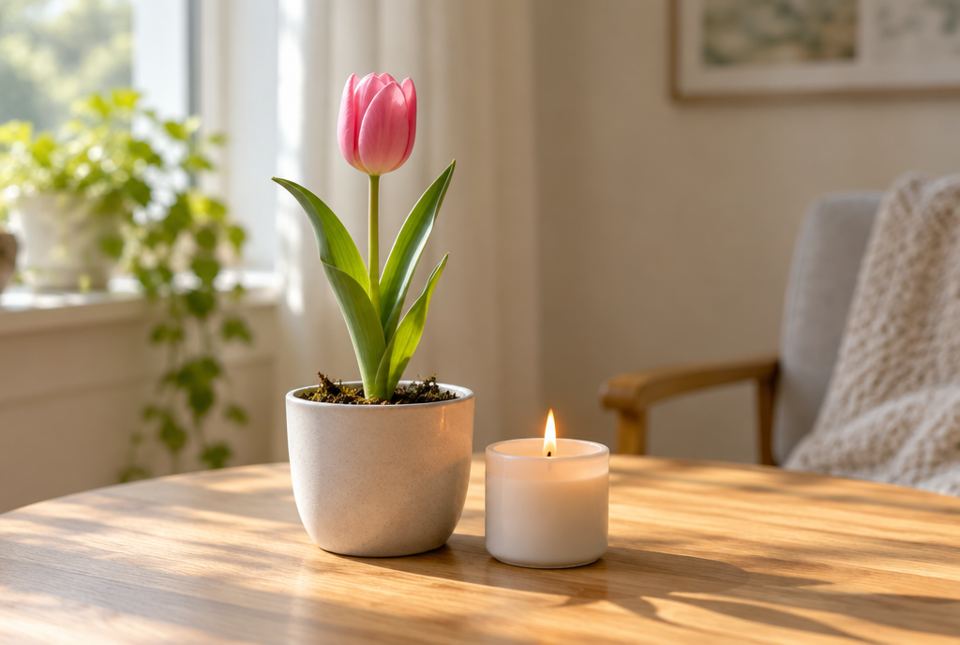 Smell the flower, blow out the candle! Breathe in slowly like you are smelling a tulip, then breathe out slowly to make a candle flicker. AI-generated imageBelly balloon breathing: when you breathe in slowly, your belly gets big like a balloon. When you breathe out, the balloon goes flat.
Step 3: Name it
Say how you feel: "I feel angry." "I feel worried."
Saying the name of a feeling helps it get smaller.
Step 4: Choose a calm tool
| Calm tool | How to do it |
|---|
| 🔢 Count | Count slowly to 10. Then count back down. |
| 🐢 Turtle | Go into your "shell": hug your knees, take 3 breaths, then come out. |
| 💪 Squeeze and let go | Squeeze your hands into tight fists. Count to 5. Let go and wiggle your fingers. |
| 🧸 Hug a stuffy | Hold something soft until you feel better. |
| 🛋️ Cozy spot | Go to a quiet, cozy place for a little while. |
| 💧 Drink water | Take a slow drink of cold water. |
| 🙋 Ask for help | Say, "I need help to calm down." |
Asking for help is a calm tool too
Sometimes feelings are too big to handle alone. That is okay.
You can go to a trusted grown-up and say: "I need help." A hug, a quiet talk, or just sitting together can help a lot.
Routines and rules help us feel calm
When we know what comes next, we feel calm and safe. That's why we have routines, like get up, get dressed, eat breakfast, brush teeth.
Different places have different rules:
- Classroom: walking feet, gentle hands.
- Gym: listen for the whistle, stop and look.
- Library: quiet voices, gentle with books.
- Playground: take turns on the slide, go down feet first.
When plans change: Sometimes the routine changes. Maybe it rains on park day, or you have a new teacher for the day. You might feel disappointed or worried. Take a slow breath, name the feeling, and try the new plan. You might like it!
Just for funTurtles have the best calm-down tool of all: they carry their own cozy spot on their back, everywhere they go! 🐢
Worked exampleLet's help Ava calm down
Ava is building with blocks. Her dad says, "Time to clean up for supper." Ava feels angry. She wants to throw a block! What can she do?
- Stop: Ava freezes and keeps the block in her hand.
- Breathe: Ava smells the flower and blows out the candle, 3 times.
- Name it: "I feel angry because I want to keep building."
- Choose a tool: She counts to 10. Her dad says, "You can leave your tower up and finish it after supper."
- Then: Ava feels calmer and helps clean up the other blocks.
Ava used Stop, Breathe, Name it, Choose. She felt calmer and didn't throw the block.
Hands-on activityMy calm-down toolbox
You need: a shoebox or a paper bag, paper, and crayons.
- Practise each calm tool with your grown-up: flower and candle breathing, belly balloon, turtle, squeeze and let go, counting to 10.
- Pick your 3 favourites. Draw a picture of each one on a small piece of paper.
- Put the pictures in your box. You can add a small stuffy or a soft scarf too.
- Keep your toolbox in a cozy spot. When you have a big feeling, open your toolbox and pick a tool!
Talk about it: "Which tool helps you the most? When could you use it?"
Your turn
1Show me "smell the flower, blow out the candle" 3 times.
Look for: a slow breath in through the nose and a long, slow breath out through the mouth, 3 times.
2Show me belly balloon breathing with your hands on your tummy.
Look for: the tummy moving out when breathing in, and in when breathing out.
3Count slowly to 10. Then count back down to 1.
1, 2, 3, 4, 5, 6, 7, 8, 9, 10. Then 10, 9, 8, 7, 6, 5, 4, 3, 2, 1. Look for a slow, steady pace.
4What are the 4 calm-down steps?
Stop, Breathe, Name it, Choose a calm tool. (Pointing to the picture is fine.)
5Who is a trusted grown-up you can go to when you need help?
Answers will vary. Examples: mom, dad, grandma, my teacher, my early childhood educator (ECE).
6Show me how a turtle calms down. 🐢
Look for: curling up or hugging knees, taking breaths, then slowly coming out.
7It was going to be park day, but now it's raining. ☔ You feel disappointed. What can you do?
Take a slow breath, say "I feel disappointed because ___", and try the new plan, like an indoor picnic or a puddle walk in rain boots. Being able to change plans is a big-kid skill.
More practice: warm-up
1Freeze like a statue! 🧊 Now unfreeze.
Look for: a still body, then moving again. Freezing is step 1: Stop.
2Squeeze your hands tight. Count to 5. Let go! How do your hands feel now?
Look for: tight fists, then loose, wiggly fingers. Many children say their hands feel "floppy" or "relaxed".
3Is it okay to have big feelings?
Yes. Everybody has big feelings. We use calm tools to help.
4What can you say if you need help calming down?
"I need help." or "Can you help me calm down?"
5In the library, do we use a loud voice or a quiet voice?
More practice: on your own
1Your little brother knocked over your puzzle. You want to yell. What is your first step?
Stop (freeze). Then breathe, name the feeling, and choose a calm tool. Yelling or hitting is not the answer.
2Finish: "I feel worried because ___." Then show one calm tool that could help.
Answers will vary. Example: "I feel worried because it's a new school." Then belly breathing or hugging a stuffy.
3Tell me the order of your bedtime routine.
Answers will vary. Example: "Bath, pyjamas, brush teeth, story, sleep." Look for 3 or more steps in order.
4Why do we take turns on the slide at the playground?
So everyone gets a chance and nobody gets hurt. Rules help us stay safe and calm.
5You tried counting to 10, and you still feel very upset. What can you do next?
Try another calm tool (breathing, turtle, hugging a stuffy) or ask a trusted grown-up for help.
Challenge
1Why do you think breathing slowly helps us calm down?
Slow breathing helps your heart slow down and your body relax. When your body is calmer, it's easier to think.
2It's a new day at a new swimming class. You feel nervous. Make a plan with 2 calm tools you could use.
Answers will vary. Example: "I'll do belly breathing, and I'll hold my grown-up's hand until I'm ready." Look for 2 tools.
3Your friend is very angry and stomping. What could you suggest to help them calm down?
"Let's smell the flower and blow out the candle together." or suggest counting, or getting a grown-up. Look for a calm tool offered kindly.
Quiz
1. What is the first calm-down step?
2. "Smell the flower, blow out the candle" is a way to...
3. You feel too upset to calm down by yourself. What can you do?
4. Which one is a calm tool?
Big idea: Self-regulation means noticing a big feeling and using strategies to calm down and get back to learning and playing (C15.4), including recognizing when to ask an adult for help (C15.1). Predictable routines, and practice coping when plans change, help children adapt (C15.2).
How to help at home:
- Practise calm tools when your child is already calm (for example at bedtime). Nobody can learn a new skill in the middle of a meltdown.
- During big feelings, co-regulate: stay close, speak softly, and breathe slowly yourself. Your calm helps their calm.
- Afterwards, talk briefly: "You were really angry. What helped?"
- Keep routines predictable. A picture schedule (morning, bedtime) helps many children.
- Give warnings before transitions: "Five more minutes, then clean-up."
Common difficulties:
- Refuses to breathe or count in the moment. That's normal. Just do it yourself beside them; many children join in.
- Uses the cozy spot to avoid jobs. Keep calm breaks short and return to the task together.
- Big reactions to small things. Check basics first: tired, hungry, thirsty, or overwhelmed?