B. Life Systems · CellsCell Theory: What Every Living Thing Has in Common
B2.1 B1.1 A3.3 A1.5About 50 minutes
Learning goals- I can state the three main ideas of the cell theory.
- I can use the cell theory to explain everyday events, like a cut healing.
- I can describe how discoveries made with microscopes led to the cell theory.
- I can decide whether something is made of cells, and explain why viruses are not cells.
Words to know
cell
The smallest unit that can carry out all the processes of life. All living things are made of one or more cells.
cell theory
A scientific theory with three main ideas: all living things are made of cells; the cell is the basic unit of structure and function in living things; all cells come from cells that already exist.
organism
Any individual living thing, such as a bacterium, a maple tree, a moose or a person.
unicellular
Made of only one cell. Example: an amoeba.
multicellular
Made of many cells. Example: a sugar maple, a frog or you.
scientific theory
A well-tested explanation of how the natural world works that is supported by a large amount of evidence. It is much more than a guess.
Remember from earlier grades
In Grade 5 you learned that your body is built from trillions of cells that work together in tissues, organs and organ systems. In Grade 6 you sorted living things into kingdoms, including tiny protists such as amoebas and paramecia that you need a microscope to see. In Grade 7 you learned that photosynthesis and cellular respiration happen inside cells.
This year we zoom right in. What exactly is a cell? How do we know living things are made of them? And what goes on inside one?
A maple tree, a mosquito and you
Think of a sugar maple, a mosquito, the mould on an old slice of bread, and you. They look nothing alike. But they share one big thing: every one of them is made of cells.
A cell is the smallest unit that can carry out all the processes of life. A living thing, or organism, can:
- take in nutrients and use energy
- grow and develop
- respond to its surroundings
- get rid of wastes
- reproduce (make more of its own kind)
A single cell can do all of these things. That is why scientists call the cell the basic unit of life.
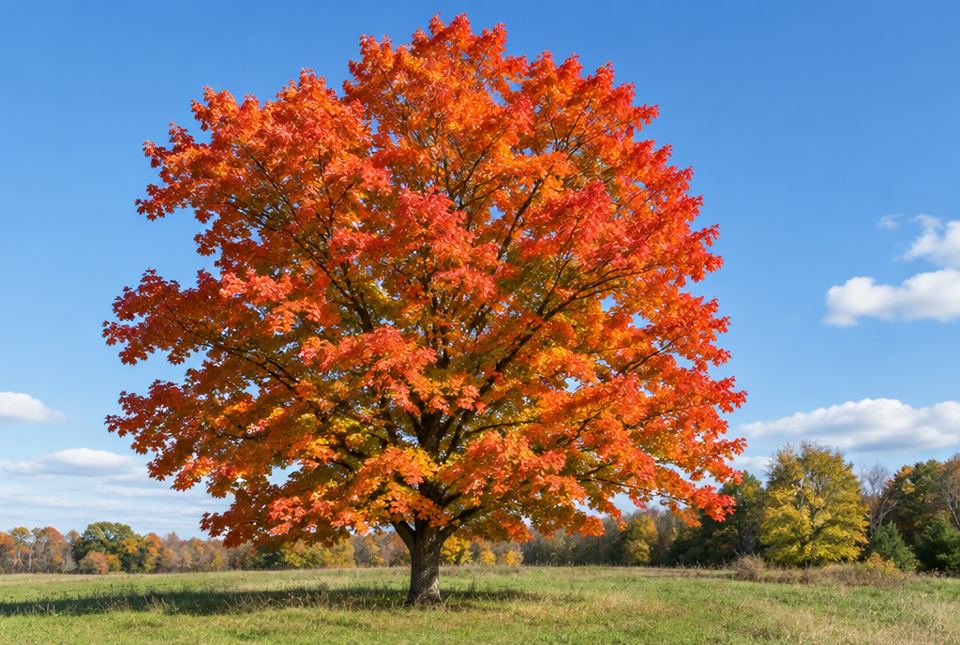 A sugar maple looks nothing like a mosquito or you, but every leaf, root and branch of it is made of cells. AI-generated image
How did scientists figure this out?
Most cells are far too small to see with your eyes alone. So the story of cells is also the story of a technology: the microscope. Each improvement in microscopes let scientists see more, and each new observation added evidence.
| When | Who | What they found |
|---|
| 1665 | Robert Hooke (England) | Looked at a thin slice of cork with his microscope and saw tiny box-like spaces. He called them cells, after small rooms. He was actually seeing the empty walls of dead cork cells. |
| 1670s | Antonie van Leeuwenhoek (the Netherlands) | Made his own powerful single-lens microscopes and was the first to describe tiny living things in pond water and other samples. He called them animalcules ("little animals"). |
| 1831 | Robert Brown (Scotland) | Described and named the nucleus, a structure he saw inside plant cells. |
| 1838 | Matthias Schleiden (Germany) | Concluded that all plants are made of cells. |
| 1839 | Theodor Schwann (Germany) | Concluded that all animals are made of cells too. |
| 1855 | Rudolf Virchow (Germany) | Made famous the idea that every cell comes from another cell. (Robert Remak, a Polish-German scientist, had published evidence for this a few years earlier.) |
The cell theory
Putting all this evidence together, scientists stated the cell theory. Its three main ideas are:
- All living things are made of one or more cells.
- The cell is the basic unit of structure and function in living things. (Structure means what something is built from; function means the job it does.)
- All cells come from cells that already exist, when one cell divides into two.
Scientists today often add a few more ideas that came from later discoveries: cells contain hereditary information (DNA) that is passed on when cells divide, and the chemical reactions of life, such as cellular respiration, happen inside cells.
Some living things are unicellular (one cell, like an amoeba or a bacterium). Others are multicellular (many cells, like a white pine, a frog or you).
What does "theory" mean in science?
In everyday talk, "I have a theory" can mean a hunch. In science, a theory is the opposite of a hunch: it is an explanation that has been tested many times and is supported by a huge amount of evidence. The cell theory has been tested by scientists for nearly two centuries, and it still holds.
What about viruses?
Viruses (like the ones that cause colds and the flu) are not made of cells. A virus is a tiny package of hereditary material inside a protein coat. It cannot take in nutrients, use energy or reproduce on its own. It can only make copies of itself inside a living cell. Because of this, most scientists do not count viruses as living things. This fits the cell theory: if something is not made of cells, it is not considered alive.
Worked exampleLet's use the cell theory to explain a healing cut
You scrape your knee. A week later, new skin covers the scrape. Where did the new skin cells come from?
- Idea 3 of the cell theory says all cells come from existing cells.
- So the new skin cells were not made from nothing, and they did not come from the scab or the bandage.
- Healthy skin cells at the edges of the scrape divided, again and again. Each division made two cells from one.
- The new cells filled in the gap, and the skin grew back.
The new skin cells came from existing skin cells dividing. This is cell theory idea 3 in action.
Cell theory idea 3 in pictures: every division turns one cell into two, so 1 becomes 2, then 4, then 8. This is how skin cells at the edge of a scrape fill in the gap.Worked exampleLet's sort: made of cells or not?
Use the cell theory to sort these: a mushroom, a piece of pine wood, a pebble, a cold virus, a dandelion.
- Mushroom: a living fungus, so it is made of many cells.
- Pine wood: once part of a living tree. Wood is made of the cell walls of dead cells, just like Hooke's cork. So it is made of cells (dead ones).
- Pebble: never living. Not made of cells.
- Cold virus: a package of hereditary material in a protein coat. Not a cell.
- Dandelion: a living plant, made of many cells.
Made of cells: mushroom, pine wood (dead cells), dandelion. Not made of cells: pebble, cold virus.
Just for funRobert Hooke named cells after small rooms. So the next time someone tells you to clean your room, you can point out that you have trillions of them, and that's a lot to ask of one person.
Hands-on activityCell theory timeline and a cell hunt
You need: a long strip of paper (or tape several sheets together), a pencil or markers, a magnifying glass if you have one, and a ripe tomato or a slice of watermelon.
- Timeline: draw a line across the strip. Mark the years 1650 to 1900. Add each discovery from the table above. Under each one, write one sentence about what technology made it possible (for example, "a better microscope").
- At the end of your timeline, write the three ideas of the cell theory in your own words.
- Cell hunt: ask a grown-up to cut the tomato or watermelon open. Look closely at the juicy flesh, with a magnifying glass if you have one. Some fruit flesh cells are large enough that you can just make out tiny glistening, bubble-like shapes.
- Write: How does what I saw support idea 1 of the cell theory?
Safety: a grown-up handles the knife. Wash your hands afterwards, and eat the fruit later if it stayed clean!
What to look for: discoveries in the right order (1665, 1670s, 1831, 1838, 1839, 1855), the three ideas stated clearly, and a link such as "the fruit is part of a living plant, and I could see it is built from many small units, its cells."
Your turn
1State the three main ideas of the cell theory.
- All living things are made of one or more cells. 2. The cell is the basic unit of structure and function in living things. 3. All cells come from existing cells.
2Who first used the word cell, and what was he looking at?
Robert Hooke, in 1665, looking at a thin slice of cork.
3What did Leeuwenhoek observe that no one had described before?
Tiny living single-celled organisms (he called them animalcules) in pond water and other samples.
4Which scientist concluded that all animals are made of cells? Which one concluded it for plants?
Animals: Theodor Schwann (1839). Plants: Matthias Schleiden (1838).
5Is a virus made of cells? Explain.
No. A virus is hereditary material in a protein coat. It cannot carry out life processes on its own and can only reproduce inside a living cell.
6Name one unicellular and one multicellular organism.
For example: unicellular: an amoeba, a paramecium, a bacterium or yeast. Multicellular: a maple tree, a mushroom, a dog or a person.
7Why was the microscope so important to the cell theory?
Most cells are too small to see with the eye alone. Without microscopes, scientists could not have collected the evidence that living things are made of cells.
More practice: warm-up
1What is the smallest unit that can carry out all life processes?
2Is a sunflower made of cells?
Yes. It is a living thing.
3Is a glass marble made of cells?
4What does multicellular mean?
5In what year did Hooke name cells?
More practice: on your own
1A piece of firewood is not alive. Is it made of cells? Explain.
Yes. The wood came from a living tree. Wood is made of the cell walls of the tree's cells, even though those cells are now dead.
2Explain how a puppy grows bigger, using the cell theory.
The puppy's cells divide to make more cells (idea 3), and its body is built of cells (idea 1), so more cells means a bigger body. Its cells also grow a bit in size.
3Why do we say the cell theory was built by many scientists over a long time?
Each scientist added evidence: Hooke named cells, Leeuwenhoek saw living cells, Brown described the nucleus, Schleiden and Schwann generalized to plants and animals, and Virchow (building on Remak) added that cells come from cells. No one person had all the evidence.
4A friend says, "The cell theory is just a theory, so it's probably wrong." How would you respond?
In science, a theory is a well-tested explanation supported by lots of evidence. The cell theory has been tested for nearly 200 years, and every living thing studied so far is made of cells.
5Name three life processes that a single cell can carry out.
Any three: taking in nutrients, using energy, growing, responding to surroundings, getting rid of wastes, reproducing.
Challenge
1Before Virchow, many people believed living things could appear from non-living matter (for example, that mice could come from old grain). Explain how the third idea of the cell theory disagrees with this.
Idea 3 says all cells come from existing cells. A mouse is made of cells, so its cells must have come from other cells, from its parents, not from grain. Living things come only from other living things.
2Hooke saw only empty boxes in cork, yet we say he discovered cells. Leeuwenhoek saw living cells moving. Whose observations gave stronger evidence that cells are the basic unit of life? Explain.
Model answer: Leeuwenhoek's. Hooke saw only the walls of dead cells, which showed structure but not life. Leeuwenhoek saw single cells that were alive and moving on their own, which showed that one cell can carry out life processes. Both were important: Hooke gave the name and showed structure; Leeuwenhoek showed function.
3Scientists are still debating whether viruses should be called living. Give one reason someone might say yes and one reason most scientists say no.
Yes: viruses have hereditary material and can make copies of themselves and change over time. No: they are not made of cells and cannot use energy or reproduce on their own; they need a living cell to do it.
Quiz
1. Which is not one of the three main ideas of the cell theory?
2. Who first named cells after looking at cork?
3. A cut on your arm heals. The new skin cells came from…
4. Why do most scientists not consider a virus to be a living thing?
Big idea: every living thing is made of cells, cells are the basic units of life, and new cells come only from existing cells.
How to help at home:
- Ask your child to explain everyday events with the cell theory: a scraped knee healing, a child growing, bread going mouldy.
- Play "cells or not?" with objects around the house: a wooden spoon (yes, dead cells), a metal spoon (no), an apple (yes), a cotton T-shirt (yes, cotton fibres come from cotton plant cells), a plastic toy (no).
- Help with the knife in the activity.
Common difficulties:
- Thinking "theory" means "guess". Stress that a scientific theory is backed by a lot of evidence.
- Thinking non-living things that came from living things (wood, paper) have no cells. They are made of dead cells or cell parts.
- Mixing up the order of discoveries. The timeline activity helps.