B. Life Systems · Interactions in the EnvironmentFirst Nations, Métis and Inuit Knowledges and Two-Eyed Seeing
B1.3 A3.3 A1.1 A1.5About 55 minutes
Learning goals- I can describe several First Nations, Métis and Inuit practices and perspectives that contribute to environmental sustainability.
- I can explain Two-Eyed Seeing and give an example of how it is used.
- I can analyse how Indigenous knowledge and Western science together give a fuller understanding of an ecosystem.
- I can learn about Indigenous knowledge respectfully, from Indigenous sources.
Words to know
Indigenous knowledge
Knowledge about the land, water, plants, animals and relationships that First Nations, Métis and Inuit communities have built over many generations and pass on through Elders, families, language, stories and practice.
Two-Eyed Seeing (Etuaptmumk)
A guiding idea shared by Mi'kmaw Elders Albert Marshall and Murdena Marshall: learning to see with the strengths of Indigenous ways of knowing with one eye and the strengths of Western ways of knowing with the other, and using both eyes together for the benefit of all.
Elder
A person recognized by their community for their knowledge, wisdom and experience, who shares teachings.
Inuit Qaujimajatuqangit
An Inuktitut term for Inuit knowledge, values and ways of living, passed down over generations.
stewardship
Taking care of land, water and living things for the future.
co-management
When Indigenous governments or organizations and other governments share decision-making about wildlife or lands.
reciprocity
Giving back in return for what you receive, a relationship of exchange and responsibility.
Knowledge from thousands of years of watching
Imagine a family that has fished the same lake, followed the same caribou, and gathered plants in the same valley for hundreds of generations. Each generation teaches the next: when the ice is safe, which plants grow after a fire, how many fish to take so there will be fish next year, how the animals have changed.
First Nations, Métis and Inuit communities across Canada hold this kind of knowledge. Today, more and more scientists, governments and communities are learning that Indigenous knowledge and Western science together can help protect ecosystems better than either one alone.
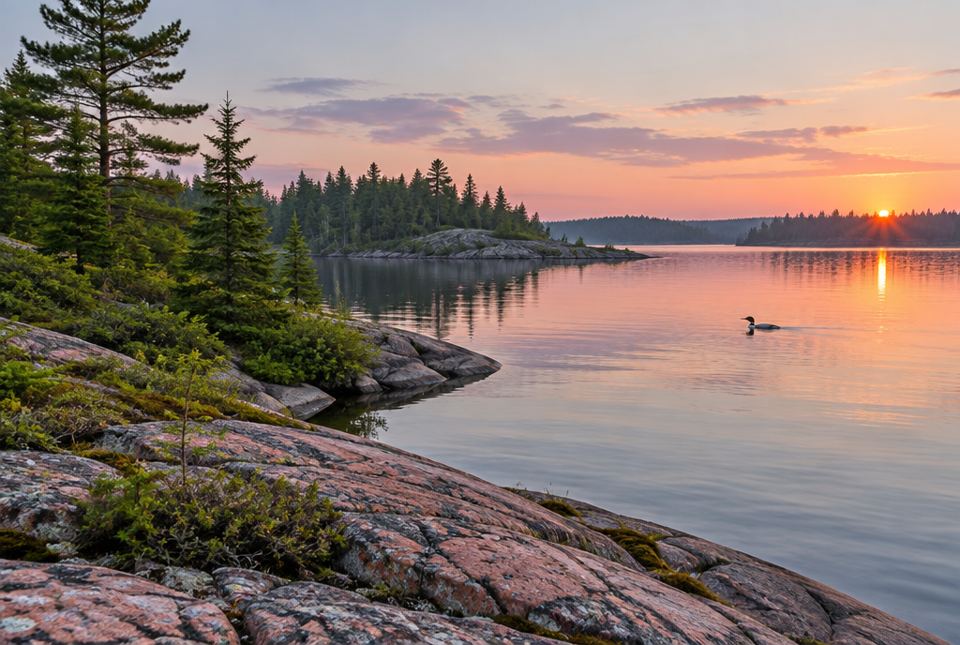 Knowledge of lands and waters like these has been built up by First Nations, Métis and Inuit communities over thousands of years of careful watching. AI-generated image
Remember from earlier grades
In Grade 4 and Grade 6, you met the idea of Two-Eyed Seeing, the Seventh Generation principle of the Haudenosaunee, and the Three Sisters. In this lesson, you will look more closely at how diverse Indigenous practices support sustainability today, and analyse how Two-Eyed Seeing works in real projects.
Many peoples, many knowledges
There is no single "Indigenous view". First Nations, Métis and Inuit are distinct peoples. There are many First Nations (for example, Anishinaabe, Haudenosaunee, Cree, Mi'kmaq, Dene and many more), each with their own languages, lands and teachings. Knowledge is tied to specific places: what a Cree community knows about the Hudson Bay Lowlands is different from what a Mi'kmaw community knows about the Atlantic coast.
Still, many Indigenous perspectives share some ideas about the environment:
- Relationships: people are part of nature, connected to the land, water, plants and animals as relatives, not separate from or above them.
- Responsibility and reciprocity: if you take from the land, you have a responsibility to care for it and give back.
- Thinking long-term: decisions should consider many generations into the future.
- Learning by careful observation over a long time, shared through language, stories, ceremonies and practice on the land.
Two-Eyed Seeing
Two-Eyed Seeing, or Etuaptmumk in the Mi'kmaw language, is an idea shared by Mi'kmaw Elder Albert Marshall of Unama'ki (Cape Breton, Nova Scotia), together with Elder Murdena Marshall and scientist Cheryl Bartlett.
- With one eye, see with the strengths of Indigenous ways of knowing.
- With the other eye, see with the strengths of Western (mainstream) science.
- Learn to use both eyes together, for the benefit of all.
Two-Eyed Seeing does not mean mixing the two into one, or using Indigenous knowledge only to "check" science. Each way of knowing is respected on its own terms, and people learn to move between them.
| Indigenous knowledge (often) | Western science (often) |
|---|
| Time span | Observations over many generations, sometimes centuries | Precise measurements, usually over years or decades |
| Scale | Deep knowledge of one place and how its parts are connected | Comparisons across many places; models of large systems |
| How it is shared | Language, stories, Elders, ceremonies, practice on the land | Experiments, data, peer-reviewed papers |
| Values | Includes responsibilities, relationships and respect | Aims to describe and explain; values are discussed separately |
Practices that support sustainability
Inuit knowledge of sea ice and wildlife. Inuit hunters read sea ice, snow, wind and animal behaviour with great skill. Inuit Qaujimajatuqangit (Inuit knowledge and values) is part of how Nunavut makes decisions. Wildlife in Nunavut is co-managed: Inuit organizations and governments share decisions, using both Inuit knowledge and scientific surveys. In some Inuit communities, a program called SmartICE combines Inuit knowledge of sea ice with sensors that measure ice thickness, to help people travel safely as the climate changes.
Indigenous Guardians. In many First Nations, Inuit and Métis communities across Canada, Guardians are community members who monitor the land and water: they track wildlife, test water quality, watch for pollution and invasive species, and teach young people on the land.
Fire stewardship. Many First Nations have used carefully planned fire for a very long time to renew berry patches, grasslands and forests. In southern Ontario, Walpole Island First Nation (Bkejwanong) cares for some of the province's largest remaining tallgrass prairie and oak savanna, which depend on fire, using planned burns.
Métis harvesting. Harvesting (hunting, fishing, trapping, gathering) is central to the Métis way of life. The Métis Nation of Ontario uses a system of Captains of the Hunt to help guide Métis harvesting in different regions of the province, following Métis traditions and conservation. Métis communities also share knowledge of the land through traditional knowledge and land use studies, for example when new mines or pipelines are proposed.
Protecting water. In many Anishinaabe teachings, women have a special responsibility for water. Josephine Mandamin, an Anishinaabe grandmother from Wiikwemkoong, began her Water Walks in 2003, walking around Lake Superior and, in later years, around all the Great Lakes, carrying a copper pail of water, to raise awareness about protecting water. Other Water Walkers continue this work.
Indigenous Protected and Conserved Areas. Indigenous nations are leading the protection of large areas. For example, Thaidene Nëné in the Northwest Territories was established in 2019 through the leadership of the Łutsël K'é Dene First Nation, working with other governments. It protects a large area of lands and waters east of Great Slave Lake.
Worked exampleLet's analyse a Two-Eyed Seeing project
In Unama'ki, the five Mi'kmaw communities created the Unama'ki Institute of Natural Resources, which studies and cares for the Bras d'Or Lakes and other ecosystems. Suppose its team wants to know why a fish species is declining in part of the lake. How could each "eye" help, and what does using both add?
- Indigenous knowledge eye: Mi'kmaw fishers and Elders may know where the fish were found in the past, how many there used to be, when they spawned, and what changed in the area over their lifetimes and their parents' lifetimes (a new road, a change in the water, a disease seen before). This gives a long history and connections between events.
- Western science eye: scientists can measure water temperature, oxygen and pollution, count fish with nets or sonar, test for disease, and compare with other lakes.
- Using both: the long-term observations can point scientists to where and what to measure. The measurements can test and add detail to what community members noticed. Decisions can include Mi'kmaw values, such as responsibility to future generations.
- Respect: the knowledge belongs to the community. It is shared with permission, and the community has a say in how it is used.
Each eye sees things the other might miss. Together they give a fuller, more reliable picture of the problem, and better ways to care for the lake.
How the two eyes help each other in the Bras d'Or Lakes example. Community knowledge guides where and what to measure; measurements test and add detail; decisions respect the community's values and permission.Learning respectfully
- Learn from Indigenous sources: First Nations, Métis and Inuit organizations, authors, Elders and Knowledge Keepers.
- Some knowledge is shared publicly, and some is not meant to be shared outside a community. Respect that.
- Name the specific nation or community whenever you can, instead of saying "Indigenous people" in general.
- Indigenous peoples and knowledges are living and growing today, not only part of the past.
Hands-on activityTwo-Eyed Seeing research card
You need: paper or a computer, and a grown-up to help find reliable sources.
- Find out whose traditional territory you live on, for example from your school, your municipality's website, or a local First Nation, Métis or Inuit organization or friendship centre.
- Choose one local species or place (for example: sugar maple, wild rice, walleye, a local river, black ash, white-tailed deer).
- Make a card with two columns. Column 1: what Western science says about it (its role in the ecosystem, threats, population). Column 2: what Indigenous knowledge and practices say about it, using only sources created by Indigenous people or organizations (for example a First Nation's website, a Métis Nation of Ontario or Inuit organization publication, a book by an Indigenous author). Name the nation or community.
- At the bottom, write two sentences: what you understand better by using both columns together.
- List your sources.
What to look for: both columns completed, Indigenous information credited to a specific nation or organization (not "Indigenous people say..."), and a reflection that explains what each way of knowing added.
Your turn
1Who shared the idea of Two-Eyed Seeing, and what is it called in the Mi'kmaw language?
Mi'kmaw Elder Albert Marshall (with Elder Murdena Marshall and scientist Cheryl Bartlett). In Mi'kmaw it is Etuaptmumk.
2Explain Two-Eyed Seeing in your own words.
Seeing with the strengths of Indigenous knowledge with one eye and the strengths of Western science with the other, and using both together for the benefit of all.
3Why is it not accurate to talk about one single "Indigenous view"?
First Nations, Métis and Inuit are distinct peoples, with many nations, languages and lands, and knowledge is tied to specific places.
4Name two ideas about the environment that many Indigenous perspectives share.
For example: relationships (people as part of nature), responsibility and reciprocity (giving back), thinking about future generations, long-term observation.
5What do Indigenous Guardians do?
Community members who monitor and care for land and water: tracking wildlife, testing water, watching for pollution and invasive species, teaching youth.
6What does co-management of wildlife in Nunavut mean?
Inuit organizations and governments share decisions about wildlife, using both Inuit knowledge and scientific surveys.
7How does SmartICE use two ways of knowing?
It combines Inuit knowledge of sea ice with sensors that measure ice thickness, helping people travel safely.
More practice: warm-up
1What does reciprocity mean?
Giving back in return for what you receive.
2What is Inuit Qaujimajatuqangit?
Inuit knowledge, values and ways of living passed down over generations.
3Which First Nation in southern Ontario uses planned burns to care for tallgrass prairie?
Walpole Island First Nation (Bkejwanong).
4What did Josephine Mandamin walk around to raise awareness?
The Great Lakes (to protect water).
5What system does the Métis Nation of Ontario use to help guide harvesting?
More practice: on your own
1Give one strength of Indigenous knowledge and one strength of Western science for understanding a changing ecosystem.
Indigenous knowledge: observations over many generations in one place, and understanding of connections. Western science: precise measurements, experiments, and comparisons across many places.
2Why is fire important for tallgrass prairie and oak savanna, and how does planned burning support sustainability?
Fire clears dead plants and woody shrubs that would otherwise take over, letting prairie grasses and wildflowers grow back. Planned, careful burns keep these rare ecosystems healthy and their many species alive.
3Explain how traditional knowledge and land use studies by Métis communities can help when a new mine is proposed.
They record where and how Métis people harvest and use the land, and what they have observed. Decision-makers can then understand which areas and species are important and how a mine might affect them and the community.
4Why should you name the specific nation when sharing Indigenous knowledge?
Knowledge is tied to specific peoples and places. Naming the nation gives credit, is more accurate, and shows respect.
5How does an Indigenous Protected and Conserved Area like Thaidene Nëné support sustainability?
It protects a large area of lands and waters from harmful development, led by the Łutsël K'é Dene First Nation, so ecosystems and the people's relationships with the land can continue for future generations.
Challenge
1A scientist says, "We only need Indigenous knowledge to fill gaps in our data." Using Two-Eyed Seeing, explain what is missing from this view.
Two-Eyed Seeing treats Indigenous knowledge as a full way of knowing with its own strengths, not just extra data for science. It includes values, relationships and responsibilities, and the communities who hold it should be partners who help decide how it is used.
2Climate change is making sea ice less predictable. Analyse how combining Inuit knowledge and science gives a better picture than either alone.
Inuit hunters notice changes over many years in ice, snow, wind and animals, and know local places and safe routes. Science adds measurements (ice thickness, temperature, satellite images) and forecasts. Together, communities get accurate, local, up-to-date information for safe travel and better decisions about wildlife.
3Choose one practice from this lesson and analyse how it supports environmental sustainability. Include who leads it and what part of the ecosystem it protects.
Model answer: Manoomin harvesting (Anishinaabe communities): harvesters take only ripe grains by hand from canoes and leave grains to reseed the bed, and communities protect rice beds from water level changes and pollution. This keeps the wild rice population and the wetland habitat it provides for ducks, fish and muskrats healthy for future generations. (Other good choices: Guardians, fire stewardship, co-management, Thaidene Nëné, Water Walkers.)
Quiz
2. Two-Eyed Seeing was shared by...
3. Which statement is most accurate?
4. Indigenous Guardians mainly...
5. Why do tallgrass prairies at places like Walpole Island First Nation depend on planned burns?
6. A strength often found in Indigenous knowledge is...
Big idea: First Nations, Métis and Inuit practices and perspectives contribute to environmental sustainability in many ways, and Two-Eyed Seeing brings together the strengths of Indigenous and Western ways of knowing.
How to help at home:
- Learn together whose traditional territory you live on, and whether there are local First Nations, Métis or Inuit organizations, events or friendship centres that share public learning.
- Choose sources created by Indigenous people and organizations for the research card. Books by Indigenous authors and websites of nations and organizations are good places to start.
- Talk about how your family takes care of the places you love, and what giving back to the land could look like.
Being respectful: use the names nations use for themselves, speak about Indigenous peoples in the present tense, and avoid general statements like "Indigenous people believe...". Some knowledge is not meant to be shared publicly.
Common difficulties:
- Describing Indigenous knowledge as "myths" or as only historical. It is living, evidence-rich knowledge.
- Treating Two-Eyed Seeing as one eye checking the other, instead of two ways of knowing working together.
- Grouping all Indigenous peoples together.