E. Earth and Space Systems · Heat in the EnvironmentRadiation: The Sun's Energy and Different Surfaces
E2.6 A1.2 A1.4 A3.2About 50 minutes
Learning goals- I can explain how heat is transferred by radiation, even through empty space.
- I can explain why dark, dull surfaces absorb more radiant energy and light, shiny surfaces reflect more.
- I can describe how the Sun's radiation affects different surfaces on Earth, such as snow, water, forests and pavement.
- I can explain the urban heat island effect and some ways to reduce it.
Words to know
radiation
The transfer of energy as waves that can travel through empty space. It does not need particles.
radiant energy
Energy carried by radiation, such as sunlight.
infrared radiation
Invisible radiation that we feel as heat. All objects give off some; warmer objects give off more.
absorb
To take in energy. A surface that absorbs radiation warms up.
reflect
To bounce energy back. A surface that reflects radiation stays cooler.
albedo
How much of the sunlight that hits a surface is reflected. Fresh snow has a high albedo; dark pavement has a low albedo.
urban heat island
A city area that is warmer than the countryside around it, because of pavement, buildings and fewer trees.
Warm on one side
Sit near a campfire on a cool evening (with a grown-up, at a safe distance). Your face and hands feel hot, but your back feels cold. The air between you and the fire is cool, so the heat is not reaching you by conduction or convection. It is reaching you by radiation.
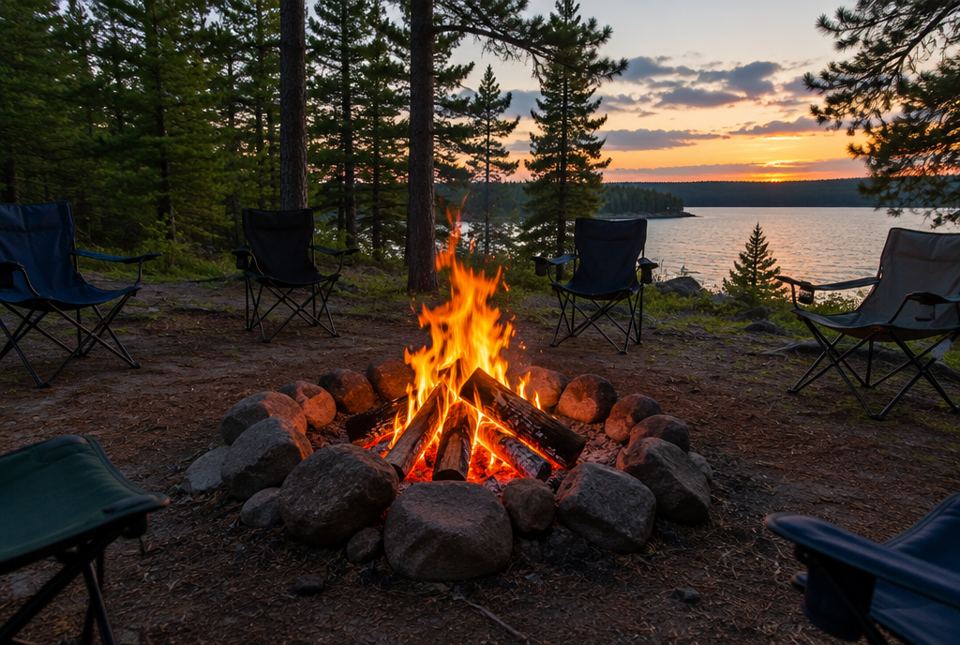 A campfire warms the side of you that faces it by radiation. The energy travels as waves through the air in straight lines. AI-generated image
How radiation works
Radiation is the transfer of energy as waves. Unlike conduction and convection, radiation does not need particles. It can travel through empty space, and it moves at the speed of light.
That is how energy from the Sun reaches Earth. Space is almost empty, so there is nothing to conduct heat and no fluid to carry it. The Sun's energy travels about 150 million kilometres to us as radiation, in roughly 8 minutes.
Sunlight includes light we can see, plus infrared radiation (which we feel as warmth) and ultraviolet (UV) radiation (which causes sunburn). In fact, every object gives off some infrared radiation. Warmer objects give off more. Your body, a mug of cocoa and a radiator all radiate heat. Some cameras can "see" this infrared and show warm objects as bright shapes.
What happens when radiation hits a surface?
Radiation that hits something can be:
- absorbed (taken in): the energy makes the particles move faster, so the surface warms up;
- reflected (bounced off): the surface stays cooler;
- transmitted (passed through): like sunlight through a clear window.
The colour and texture of a surface make a big difference:
- Dark and dull (matte) surfaces absorb more radiation and warm up more.
- Light-coloured and shiny surfaces reflect more and stay cooler.
That is why a dark car seat burns in summer, why light-coloured clothes feel cooler in the sun, and why emergency blankets are shiny: they reflect your body's infrared radiation back to you.
| Surface | Absorbs or reflects most sunlight? | Effect |
|---|
| Fresh snow | Reflects most of it (often 80% or more) | stays cold; sunny snowy days can still be very cold; snow glare can burn eyes |
| Ice (clean) | reflects a lot | stays cold |
| Open lake or ocean water | absorbs most of it | warms slowly but stores lots of heat |
| Dark asphalt (roads, parking lots) | absorbs most of it | gets very hot in summer |
| Forest | absorbs most of it | trees also shade and cool the ground |
| Light-coloured roof or concrete | reflects more than dark surfaces | stays cooler |
Why this matters for our planet
Snow and ice keep the Arctic cool. They reflect most sunlight back to space. When sea ice melts, the darker ocean water underneath absorbs more sunlight and warms up, which melts even more ice. Scientists call this a feedback loop, and it is one reason the Arctic is warming faster than most of the world.
Dirty snow melts faster. In spring you may notice that snowbanks covered in dark road grit melt faster than clean white snow beside them. The darker surface absorbs more of the Sun's energy.
Cities are heat islands (A3.2). Pavement, dark roofs and buildings absorb lots of sunlight and release heat into the evening air. With fewer trees for shade, a city can be several degrees warmer than the countryside around it. City planners, engineers and landscape architects fight this with trees and parks, green roofs (roofs covered with plants), light-coloured "cool" roofs and lighter pavement. This mixes science with math (measuring temperatures and costs), geography (where people live) and health (heat waves can be dangerous, especially for older adults and young children).
Worked exampleLet's predict: black and white T-shirts
Two identical T-shirts, one black and one white, hang in the same sunny spot for 20 minutes. Predict which one will be warmer and explain using the word radiation.
- Both shirts receive the same radiation from the Sun.
- The black shirt is dark, so it absorbs more of the radiation. The absorbed energy makes its particles move faster.
- The white shirt reflects more of the radiation, so less energy is absorbed.
The black T-shirt will be warmer, because dark surfaces absorb more radiant energy.
Just for funFunny but true: sunlight takes about 8 minutes to travel from the Sun to Earth. So the warm sunshine on your face is always 8-minute-old news.
Hands-on activityMelting race in the sun (A1.2)
You need: a sunny day (or a sunny windowsill), 4 identical ice cubes, 4 small identical plates or jar lids, a sheet of black paper, a sheet of white paper, a piece of aluminum foil (shiny side up), scissors, and a clock. (Optional: 2 thermometers.)
- Cut squares of the black paper, white paper and foil, each big enough to cover a plate. Leave the fourth plate uncovered as your control.
- Put the plates side by side in full sun, at the same time, on the same surface.
- Predict: which ice cube will melt first? Last?
- Place one ice cube on each and start timing. Check every 5 minutes and record how much is left.
- Optional: lay two thermometers in the sun, one on black paper and one on white paper. Record both after 15 minutes.
What to look for: the ice on black paper usually melts first. The ice on white paper or shiny foil melts more slowly because those surfaces reflect more radiation.
Fair test: same size of ice cubes, same sunny spot, same start time. Change only the surface.
Safety (A1.4): never look directly at the Sun, even for a moment, and not through sunglasses. Wear sunscreen and a hat if you are outside for a long time. Foil and dark objects in the sun can get hot, so touch them carefully. Never leave a thermometer, phone or anything else on a car dashboard in the sun.
Your turn
1What makes radiation different from conduction and convection?
Radiation does not need particles. It is energy carried by waves, so it can travel through empty space.
2How does the Sun's energy reach Earth?
By radiation, through the almost empty space between the Sun and Earth.
3What three things can happen when radiation hits a surface?
It can be absorbed, reflected or transmitted (passed through).
4Which absorbs more radiant energy: a dark, dull surface or a light, shiny one?
5Why do snowbanks covered in road grit melt faster in spring?
The dark grit absorbs more of the Sun's radiation than clean white snow, which reflects most of it.
How much of the sunlight hitting a surface is reflected. Snow has a high albedo; asphalt has a low albedo.
7Name two ways a city can reduce the urban heat island effect.
Any two: plant trees and create parks; green roofs; light-coloured (cool) roofs; lighter pavement.
More practice: warm-up
1What kind of invisible radiation do we feel as heat?
2Do all objects give off infrared radiation?
Yes. Warmer objects give off more.
3Which surface reflects most sunlight: fresh snow or a parking lot?
4Why are emergency blankets shiny?
Shiny surfaces reflect infrared radiation, so the blanket reflects body heat back to the person.
5Name one material in the melting race that reflects a lot of radiation.
White paper or shiny aluminum foil.
More practice: on your own
1Explain why your face feels hot near a campfire but your back feels cold.
The fire's energy reaches your face by radiation, which travels in straight lines from the fire. Your back faces away, so it receives little radiation and loses heat to the cool air.
2Explain the Arctic sea ice feedback loop in three steps.
- Sea ice reflects most sunlight. 2. When it melts, darker ocean water is exposed and absorbs more sunlight. 3. The water warms and melts more ice, which exposes more dark water, and so on.
3Why is a black asphalt playground hotter than a grassy field on a sunny day?
Dark asphalt absorbs most of the sunlight and heats up. Grass reflects a bit more, plants use some energy and release water that evaporates and cools the area, and the soil does not get as hot.
4In the melting race, why was one plate left uncovered?
It was the control: something to compare the other results with, to show the effect of each surface.
5A family in Windsor is choosing a new roof. Why might a light-coloured roof save money in summer?
A light roof reflects more sunlight, so the house heats up less and air conditioning uses less energy.
Challenge
1A thermos has a shiny silver lining inside. Which type of heat transfer does the shiny lining reduce, and how?
It reduces radiation. The shiny surface reflects infrared radiation back toward the drink, so less heat escapes (or, for a cold drink, less heat gets in).
2A city records 32 °C downtown and 28 °C in a nearby rural area on the same afternoon. What is the difference, and give two reasons for it.
4 °C warmer downtown. Reasons: pavement and dark roofs absorb more radiation; fewer trees for shade; buildings trap heat; heat from cars and air conditioners.
3Why is loose, light-coloured clothing a good choice for a hot, sunny summer day?
Light colours reflect more of the Sun's radiation, so the clothing absorbs less heat. Loose clothing lets air move (convection) and sweat evaporate, which cools the body.
Quiz
1. Which type of heat transfer can travel through empty space?
2. Which surface absorbs the most sunlight?
4. When Arctic sea ice melts, the exposed ocean...
5. Which is a way to reduce the urban heat island effect?
6. Why is it dangerous to look at the Sun?
Big idea (E2.6): radiation transfers energy as waves through empty space. Dark, dull surfaces absorb more radiation and warm up; light, shiny surfaces reflect more. Snow, ice, water, forests and pavement respond differently to sunlight, which affects local and global temperatures. The melting race is a fair test (A1.2) with sun safety (A1.4); the heat-island section connects science to planning, math and health (A3.2).
How to help: on a sunny day, compare how hot different surfaces feel (carefully): a dark car, a light car, a sidewalk, grass. In spring, look for dirty snowbanks melting faster than clean ones.
Common difficulties:
- Thinking radiation means something dangerous only. In science, sunlight and the warmth from a fire are radiation.
- Thinking cold snow means no sunlight. Snow receives sunlight but reflects most of it.
Safety: never look at the Sun. Use sunscreen and hats. Dark surfaces and foil can get hot in the sun. Campfires only with an adult, at a safe distance.