B. Canada, 1800–1850: Conflict and Challenges · Canada, 1800–1850: Conflict and ChallengesDurham, the Act of Union and Responsible Government
B3 B1 B2About 50 minutes
Learning goals- I can describe Lord Durham's report and its main recommendations.
- I can explain what the Act of Union (1840) changed and how French Canadians viewed it.
- I can explain what responsible government is and how it was achieved in 1848.
- I can explain why the Rebellion Losses Bill (1849) was a test of responsible government.
Words to know
Durham Report
Lord Durham's 1839 report on the causes of the rebellions and how to govern the colonies.
assimilate
To absorb a group into another culture so it loses its own language and identity.
Act of Union
The British law (1840) that joined Upper and Lower Canada into the Province of Canada, starting in 1841.
responsible government
A system in which the government's leaders (the cabinet) must have the support of the majority in the elected assembly, or resign.
cabinet
The group of leading ministers who run the government.
bill
A proposed law, before it is passed.
Let's start with a question
Who should have the final say in running a country: a governor sent from far away, or the leaders chosen by the people who live there?
Today the answer seems obvious. In 1838 it was not. Between 1838 and 1849, the colonies moved from the first answer toward the second, without another rebellion.
Lord Durham's Report (1839)
After the rebellions, Britain sent Lord Durham to investigate. He arrived in 1838 and delivered his report in 1839. He made two big recommendations:
- Unite Upper and Lower Canada into one colony.
- Give the colony responsible government for local matters: the governor should choose advisers who had the support of the elected assembly.
Durham described the conflict in Lower Canada as "two nations warring in the bosom of a single state". He also wanted French Canadians to be assimilated into English-speaking culture, and called them "a people with no history, and no literature". French Canadians were deeply offended. Writers like François-Xavier Garneau responded by writing histories of French Canada.
The Act of Union (1840)
Britain passed the Act of Union in 1840. On February 10, 1841, Upper and Lower Canada became the Province of Canada, with two parts: Canada West and Canada East.
- One legislature, with equal seats for each part (42 each), even though Canada East had more people. This favoured English speakers.
- English was the only official language of the legislature's records.
- Upper Canada's large debts were shared with Lower Canada.
- Kingston was the first capital.
- Britain did not grant responsible government yet.
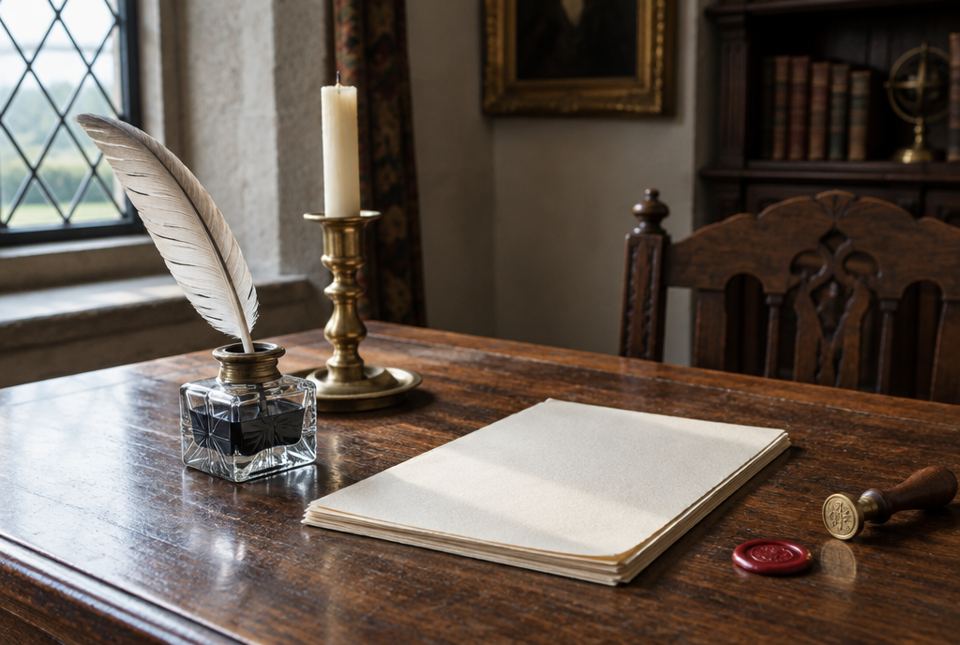 Writing tools of the 1830s and 1840s. Reports like Lord Durham's, and the letters between the colonies and Britain, were all written by hand. AI-generated imageThe Act of Union joined Upper Canada (green) and Lower Canada (yellow) into the Province of Canada (blue), which began in 1841.
Baldwin and LaFontaine
Many French Canadians saw the union as an attack on their language and culture. Louis-Hippolyte LaFontaine, a French-Canadian Reformer, decided to work within the system. He formed an alliance with Robert Baldwin, a Reformer from Canada West. Together, English- and French-speaking Reformers could win a majority.
Their friendship was practical and real. When LaFontaine lost his election in 1841, Baldwin helped him win a seat in York, near Toronto. Later, LaFontaine's supporters helped Baldwin win a seat in Rimouski in Canada East.
Just for funWhen LaFontaine lost his election in 1841, Baldwin helped him win a seat near Toronto. Later, LaFontaine's supporters helped Baldwin win a seat in Rimouski. The 1840s version of "I've got your back!"
Responsible government, 1848
- In February 1848, Nova Scotia became the first colony in British North America to gain responsible government, after years of campaigning by journalist and politician Joseph Howe.
- In March 1848, the Reformers won a majority in the Province of Canada and the LaFontaine–Baldwin government took office. The governor general, Lord Elgin, accepted their advice on local matters.
- In 1848, French was again allowed in the legislature, and in 1849 Elgin read the Speech from the Throne in both English and French.
The big test, 1849: The government passed the Rebellion Losses Bill to pay people in Canada East whose property had been damaged in 1837–38. Many Tories were furious, saying it rewarded rebels. Elgin disagreed personally with some of it, but he signed it on April 25, 1849, because it had the support of the elected majority. That night an angry mob in Montreal burned the Parliament buildings. Responsible government survived the test.
Who still had no voice?
Responsible government was a big step toward democracy, but it was not democracy for everyone. Only men who owned enough property could vote. Women could not vote; a few property-owning women in Lower Canada had voted in earlier years, but a law in 1849 ended that. First Nations had no say in the government that made decisions about their lands. Many poor men, including many working people, could not vote either.
Worked exampleModelled example: Continuity and change in government, 1830 vs 1849
What changed and what stayed the same in how the Canadas were governed?
- Change: Two colonies became one Province of Canada (1841).
- Change: The cabinet now needed the support of the elected assembly (responsible government, 1848).
- Change: French was again allowed in the legislature (1848).
- Continuity: Britain still controlled foreign affairs and trade; the governor was still appointed by Britain.
- Continuity: Only male property owners could vote; women, First Nations and many poor men had no vote.
Big changes toward self-government came quickly after 1838, but who had a voice changed very little. Both are true.
Why it matters today
Responsible government is still how Canada works. The prime minister and premiers stay in office only while they have the confidence (support) of the elected House of Commons or legislature. This idea goes back to 1848.
Hands-on activityConfidence vote at home
You need: your family, slips of paper, a hat or bowl.
- Choose a family "premier" to make a plan for something small, like a weekend meal or a game night.
- The premier presents the plan. Everyone else votes yes (confidence) or no (non-confidence) on slips of paper.
- If most vote no, the premier must step aside and someone else proposes a plan.
- Now try it the old way: one person (the "governor") decides without any vote, no matter what others think.
- Talk: which way felt fairer? Which was faster? Who had no vote in 1848, and how would that feel?
Look for: your child connecting the "confidence" rule to responsible government.
Your turn
1What were Lord Durham's two main recommendations?
Unite Upper and Lower Canada, and grant responsible government for local matters.
2How did Durham view French Canadians, and how did they react?
He wanted them assimilated and called them a people with "no history, and no literature". They were deeply offended, and writers like Garneau wrote histories of French Canada in response.
3When did the Province of Canada begin?
4Why did equal seats in the union legislature favour English speakers?
Canada East had more people but got the same number of seats, so each French-Canadian vote counted for less.
5What is responsible government?
A system where the cabinet must have the support of the majority in the elected assembly, or resign.
6Which colony got responsible government first?
Nova Scotia (February 1848).
7Why was the Rebellion Losses Bill a test of responsible government?
Lord Elgin signed it because the elected majority supported it, even though many people (and some of his own views) opposed it. This showed the governor would follow the assembly on local matters.
More practice: warm-up
1What were the two parts of the Province of Canada called?
Canada West and Canada East.
2Which Nova Scotian campaigned for responsible government?
3Who was the governor general in 1849?
4What happened to the Parliament buildings in Montreal in 1849?
An angry mob burned them.
5Name the two Reform leaders who formed an alliance.
Robert Baldwin and Louis-Hippolyte LaFontaine.
More practice: on your own
1Why did LaFontaine choose to work with English-speaking Reformers instead of opposing the union outright?
By joining forces, Reformers from both parts could form a majority, win responsible government and use it to protect French Canadians' rights, which was more effective than resistance.
2How did Baldwin and LaFontaine show trust in each other?
Each helped the other win a seat in the other's part of the province (LaFontaine in York, Baldwin in Rimouski).
3Explain one consequence of the Act of Union for French Canadians.
Any: English-only legislature records (until 1848); equal seats despite a larger population; sharing Upper Canada's debt; a feeling their culture was under threat, which strengthened their determination to protect it.
4Why do some people say responsible government was won "without a shot"?
It came through elections, alliances and negotiation in 1848, not through another rebellion.
5Who did not benefit directly from responsible government?
Women (barred from voting by an 1849 law), First Nations (no say in the government), and men without property.
Challenge
1Durham's report was both a success and a failure. Explain.
Success: his recommendation of responsible government was achieved in 1848 and still shapes Canada. Failure: his plan to assimilate French Canadians failed; they kept their language and culture, and the union even helped French and English Reformers work together. His harsh words also caused lasting anger.
2Trace the cause-and-consequence chain from the 1837 rebellions to the Rebellion Losses Bill of 1849.
Rebellions (1837–38) → Britain sends Durham (1838) → Durham Report (1839) → Act of Union (1840–41) → Baldwin–LaFontaine alliance → Reform majority, responsible government (1848) → Rebellion Losses Bill passed and signed by Elgin (1849) → Tory riot burns Parliament, but responsible government holds.
3Was 1848 a turning point for democracy in Canada? Argue a position with evidence on both sides.
Yes: for the first time, the government had to answer to the elected assembly, a system Canada still uses. But: voting was limited to male property owners, the few women who had voted lost that right in 1849, and First Nations had no voice. Conclusion: a real turning point for self-government, but only a partial step toward democracy for all.
Quiz
1. What did Lord Durham recommend?
2. When did the Province of Canada begin?
3. What is responsible government?
4. Which colony was first to gain responsible government?
5. Who formed an alliance to win responsible government in the Province of Canada?
6. Why was Elgin's signing of the Rebellion Losses Bill important?
7. Which group could vote in 1848?
Big idea: Students describe significant developments, the Durham Report, the Act of Union and responsible government, and explain their impact (B3), compare government then and now (B1), and consider French-Canadian and other perspectives (B2).
How to help: Try the confidence vote at home. Connect to current events: when you hear about a "confidence vote" or a government needing support in Parliament, point out that this goes back to 1848.
Common difficulties: Confusing responsible government with democracy for all; thinking Durham was simply a hero (his assimilation plan hurt French Canadians); mixing up the 1840 Act of Union with Confederation in 1867.