B. Natural Resources Around the World: Use and Sustainability · Natural Resources Around the World: Use and SustainabilityDifferent Perspectives on Using the Natural Environment
B3.4 B2.2About 50 minutes
Learning goals- I can describe the perspectives of different groups about using the natural environment to meet human needs.
- I can explain why First Nations, Métis and Inuit communities have rights and a say in decisions about their lands.
- I can explain why people may disagree about the same resource project.
Words to know
perspective
A point of view: how a person or group sees an issue, based on their needs, values and experiences.
stakeholder
A person or group affected by a decision, or who has an interest in it.
treaty
A formal agreement. Treaties between the Crown (the government) and First Nations set out rights and responsibilities about land and resources.
traditional territory
The lands a First Nation, Métis or Inuit community has lived on, used and cared for over many generations.
consultation
Asking people for their views and taking them seriously before a decision is made.
multinational company
A company that does business in many countries.
resource town
A town whose economy depends mainly on one resource industry, like a mine or a mill.
Hook: one lake, many voices
Imagine a company wants to build a mine near a northern lake. A miner looking for work, an Elder who fishes there, a cottage owner, a biologist, and a company manager all look at the same lake. Do they see the same thing? Not at all! Each has a different perspective.
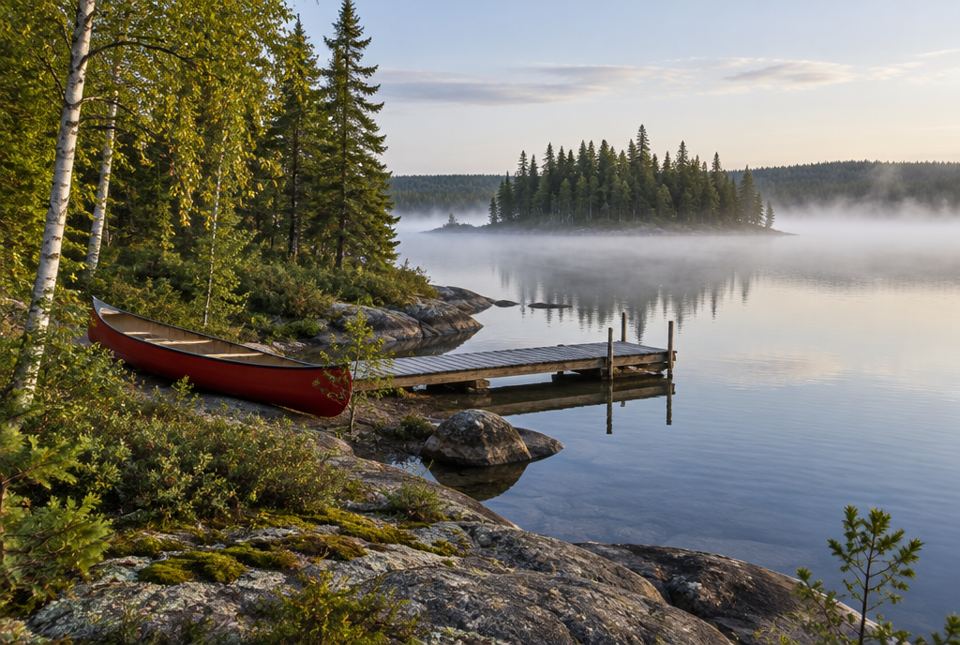 One lake, many perspectives. A cottage owner, a person who fishes here, a miner and a biologist might each value this place in different ways. AI-generated image
Why perspectives differ
People's perspectives depend on their needs (jobs, food, clean water), their values (what they think matters most), their experiences and history, and their relationship to the land. No group is all right or all wrong. A geographer tries to understand each perspective and the evidence behind it.
| Group | What they might focus on | Possible concerns |
|---|
| First Nations, Métis or Inuit community | Rights to their traditional territory; the health of land, water and wildlife for future generations; benefits and jobs for their members; having a real say (or not giving consent) | Harm to hunting, fishing and gathering; cultural and sacred sites; being left out of decisions |
| Environmental organization | Protecting habitat, water, wildlife and climate | Pollution, habitat loss, greenhouse gases, long-term damage |
| Multinational mining or forestry company | Profit for its owners and investors; meeting demand; following the rules | Costs, delays, prices, competition from other countries |
| Residents of a resource town | Steady, well-paying jobs; a strong local economy; services like schools and hospitals | Losing jobs if the mine or mill closes; pollution in their community |
| Government | Jobs, tax money, energy, protecting the environment, respecting rights | Balancing the needs of many groups and obeying laws and treaties |
First Nations, Métis and Inuit perspectives and rights
First Nations, Métis and Inuit peoples have cared for and lived on these lands for thousands of years, and they live in communities across Canada today. There is no single Indigenous perspective. Each nation and community has its own teachings, needs and views, and people within a community can disagree, just as in any community.
Many First Nations, Métis and Inuit people describe a relationship with the land based on respect and responsibility: the land is not just a supply of resources, but something people belong to and must care for, for future generations.
Their rights are also part of Canadian law:
- Treaties cover much of Canada. For example, much of northern Ontario is in Treaty 9 (the James Bay Treaty).
- Section 35 of Canada's Constitution Act, 1982 recognizes and affirms the existing Aboriginal and treaty rights of First Nations, Métis and Inuit peoples.
- Canada's courts have ruled that governments have a duty to consult Indigenous peoples when a decision could affect their rights. In 2003, in a case called R. v. Powley, the Supreme Court of Canada recognized a Métis community's right to hunt for food near Sault Ste. Marie.
- In 2021 Canada passed a law to bring its laws in line with the UN Declaration on the Rights of Indigenous Peoples (you learned about UNDRIP in Grade 6). UNDRIP says Indigenous peoples should give free, prior and informed consent before projects affecting their lands go ahead.
Some First Nations, Métis and Inuit communities partner in or own resource and energy projects; others oppose projects on their lands; many want projects only if they are done their way, with real decision-making power.
A real example: the Ring of Fire
The Ring of Fire is an area in the far north of Ontario, in Treaty 9 territory, with large deposits of minerals such as chromite and nickel. It has no all-season roads. Some nearby First Nations, including Marten Falls and Webequie, have led studies for roads that could connect their communities and the mineral deposits. Other First Nations in the region have raised serious concerns or opposed development, saying they have not been properly consulted or that the area's huge peatlands and rivers must be protected. Mining companies, governments, environmental groups and northern towns all have perspectives too. This shows how complex resource decisions can be.
Worked exampleLet's map perspectives on a pretend project
Pretend example. A company plans an open-pit copper mine near Loon Lake, inside a First Nation's traditional territory, 30 km from the town of Pinecrest. Describe the perspectives of four groups.
- First Nation: Members want to know how the mine would affect fish, moose and water they rely on, and whether their treaty rights are respected. Some members may welcome jobs and a share of profits; others may oppose it to protect the land. They expect real consultation and a say in the decision.
- Environmental organization: Worries about tailings, water pollution in Loon Lake, and habitat loss. May ask for strict rules or for the area to be protected.
- Mining company: Wants to supply copper (in demand for wiring and electric vehicles) and make a profit. Promises jobs and a plan to reclaim the land when the mine closes.
- Pinecrest residents: Many welcome jobs and new business for stores; some worry about truck traffic, dust and what happens when the mine closes.
Each group's perspective comes from its needs, values, history and relationship to the land. A fair decision has to listen to all of them, and governments must meet their legal duty to consult the First Nation.
The pretend Loon Lake mine seen from four perspectives. Each group looks at the same lake but focuses on different things.Just for funPerspective practice: describe the same pizza from the point of view of the cheese, the crust and the person who has to share it with five friends. Same pizza, very different perspectives!
Hands-on activityKitchen-table town meeting
Play this with your family (2 to 5 people).
- Use the Loon Lake mine from the example. Each person takes a role: First Nation member, environmental group, company manager, Pinecrest resident, government official.
- Each person has one minute to explain their perspective, using at least one reason and one piece of evidence or example.
- After everyone speaks, try to agree on conditions that would make the project acceptable (or decide it shouldn't go ahead).
- Afterwards, each person says which perspective was hardest to understand and why.
Look for: respectful listening, reasons for each view, and a final decision that responds to more than one perspective. Remind players that they are playing roles; real First Nations communities speak for themselves.
Your turn
A point of view: how a person or group sees an issue, based on their needs, values and experiences.
2Why might residents of a resource town support a new mine?
It brings jobs, money for local businesses and support for services like schools and hospitals.
3What might an environmental organization worry about with a new mine?
Pollution (tailings, water), habitat loss, greenhouse gases or other long-term damage.
4Is there one single Indigenous perspective on resource development? Explain.
No. Each First Nation, Métis and Inuit community has its own views, and people within a community can disagree. Some partner in projects, others oppose them.
5What does the duty to consult mean?
Governments must consult (ask and seriously consider the views of) Indigenous peoples when a decision could affect their rights.
6What does free, prior and informed consent mean, in your own words?
Indigenous peoples should agree to a project freely (without pressure), before it starts, knowing all the facts about it.
7Which treaty covers much of northern Ontario?
Treaty 9 (the James Bay Treaty).
More practice: warm-up
A person or group affected by or interested in a decision.
2What does a multinational company do?
It does business in many countries.
A town whose economy depends mainly on one resource industry.
4Name one mineral found in the Ring of Fire.
5Which document, which Canada passed a law to follow in 2021, includes free, prior and informed consent?
The UN Declaration on the Rights of Indigenous Peoples (UNDRIP).
More practice: on your own
1Why might a company and an environmental group look at the same forest differently?
The company may see timber and profit (meeting demand, jobs). The environmental group may see habitat, clean water and carbon storage to protect. Their needs and values differ.
2Why might members of the same First Nation disagree about a mine?
Some may focus on jobs, income and services the project could bring; others may focus on protecting the land, water and way of life for future generations. Like any community, people have different priorities.
3Why do treaties matter in decisions about resources?
Treaties are legal agreements that set out rights about land and resources. Governments and companies must respect treaty rights when planning projects on treaty lands.
4Why is a road to the Ring of Fire seen by some as an opportunity and by others as a risk?
Opportunity: year-round access, lower costs for food and fuel, jobs, mining. Risk: changes to peatlands, rivers and wildlife, more outside traffic, and impacts on traditional ways of life.
5Why should a geographer look at evidence from more than one perspective?
One group may share only the facts that support its view. Looking at several perspectives gives a fuller, fairer picture.
Challenge
1A company says a mine will create 300 jobs. A First Nation says it will harm a river its members fish in. Explain why both statements could be true at the same time, and what a fair decision process would include.
Both can be true: a mine can create jobs and also pollute or change a river. A fair process would include consultation with (and, under UNDRIP, seeking the consent of) the First Nation, independent environmental studies, conditions to protect the river, a plan to share benefits, and a plan for reclaiming the land.
2Why might a person's perspective on a mine change over time?
Their needs might change (losing a job, having children), they might see new evidence (pollution or benefits), or the project might change. Perspectives aren't fixed.
3Explain the difference between being consulted and giving consent.
Being consulted means being asked for your views, which decision-makers must take seriously. Giving consent means agreeing: if you don't agree, the project shouldn't go ahead. Consent gives a group more decision-making power than consultation.
Quiz
1. Which group would most likely focus mainly on jobs and keeping local stores busy?
2. Which statement about First Nations, Métis and Inuit perspectives is accurate?
3. What does the duty to consult require governments to do?
4. Which treaty covers much of northern Ontario, including the Ring of Fire?
5. Why do people have different perspectives on the same project?
6. What does free, prior and informed consent mean?
How to help: Read or watch a news story about a resource project together and list the groups involved. For each, ask: "What do they need? What do they value?" Encourage respectful language about every group.
Respectful learning: Speak about First Nations, Métis and Inuit peoples as living communities with rights and diverse views. The best sources for their perspectives are the communities and organizations themselves (their own websites and statements). In the role-play, remind your child that they are imagining a role, not speaking for real people.
Common difficulties:
- Treating any group as "the good guys" or "the bad guys." Each perspective has reasons.
- Treating Indigenous peoples as one group with one view.
- Confusing consultation (being asked) with consent (agreeing).