B. Active Living / C. Movement Competence · Active Living and Movement: Moving with Purpose, Safety and SkillOutdoor Smarts: Sun, Heat, Air Quality, Bugs and Cold
B3 A1.6 A1.2About 35 minutes
Learning goals- I can name environmental health risks that can affect outdoor activity in Ontario.
- I can read the UV index and the Air Quality Health Index and decide how to stay safe.
- I can protect myself from sun, heat, insects, cold and lightning.
- I can make a "plan B" when the weather or air isn't safe for hard outdoor activity.
Words to know
environmental health risk
Something in the environment, like strong sun, smoky air, insects or extreme cold, that could harm your health.
UV index
A number that tells how strong the sun's ultraviolet (UV) rays are. Higher means you can burn faster.
AQHI
The Air Quality Health Index: Canada's 1 to 10+ scale for how risky the air is for your health.
humidex
A number that tells how hot it feels when heat and humidity (moisture in the air) are combined.
wind chill
A number that tells how cold it feels on your skin when wind is added to cold.
tick
A tiny bug that bites and holds on to skin. Some ticks can carry Lyme disease.
frostbite
Skin and the tissue under it freezing in the cold, usually on fingers, toes, ears, nose or cheeks.
Remember from Grade 4
In Grade 4 you learned to stay safe in cold and wind, hot sun, thunderstorms, ice and snow, and smoky or smoggy air. You learned: "When thunder roars, go indoors," and to wait 30 minutes after the last thunder.
This year you will read the real numbers that weather reports give, like the UV index and the Air Quality Health Index, learn about insects like ticks, and make a plan B for days when the outdoors isn't safe for hard activity.
What does the weather app mean?
You check the weather before a soccer game on a July afternoon. It says:
31°C, humidex 38, UV index 9, AQHI 3
That's a lot of numbers! By the end of this lesson, you will know what each one means and how to play safely that day.
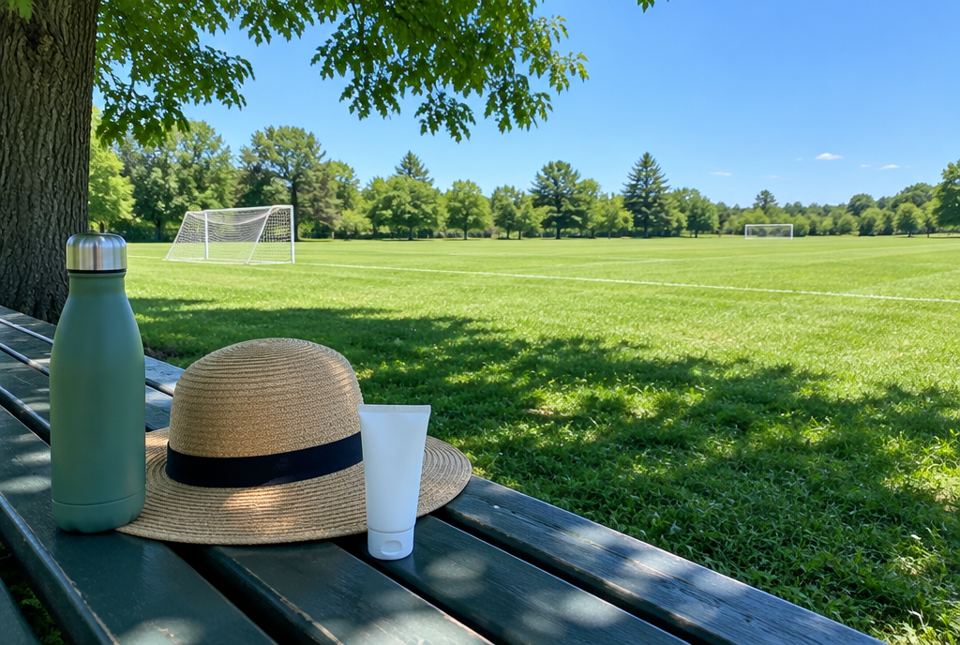 Ready for a hot, sunny game: water, a hat, sunscreen and a shady place to rest. Check the UV index and humidex before you play. AI-generated image
Environmental health risks
An environmental health risk is something in the world around us that could harm our health. For outdoor activity in Ontario, the main ones are:
- strong sun (UV rays),
- heat and humidity,
- poor air quality (smog or wildfire smoke),
- insects like ticks and mosquitoes,
- extreme cold and wind,
- lightning.
You don't need to be scared of being outside. You just need to check, plan and protect.
Sun: the UV index
The sun gives off ultraviolet (UV) rays. You can't see or feel them, but they can burn your skin and harm your eyes. Sunburns can happen even on cloudy days, and in winter, because snow reflects UV rays.
| UV index | Level | What to do |
|---|
| 0 to 2 | Low | Little protection needed for most people. |
| 3 to 5 | Moderate | Protect yourself: hat, sunscreen, sunglasses. Use shade around midday. |
| 6 to 7 | High | Protect yourself and look for shade more often. |
| 8 to 10 | Very high | Extra protection. Try to stay in the shade around midday. |
| 11 or more | Extreme | Take full precautions. Plan activity for times with less sun. |
Sun safety: In spring and summer in Canada, UV rays are usually strongest from about 11 a.m. to 3 p.m.
- Find shade.
- Wear a wide-brimmed hat, sunglasses and clothing that covers your skin.
- Use sunscreen with SPF 30 or higher on skin that shows. Put it on before going out and again after swimming or sweating a lot.
- Never look straight at the sun.
Heat and humidity: the humidex
On humid summer days, the air is full of moisture. Sweat can't dry off your skin as easily, so it's harder for your body to cool down. The humidex tells how hot it feels.
On hot, humid days:
- Drink water before, during and after activity, even if you're not thirsty yet.
- Play in the shade, take more breaks, and choose lighter activities.
- Move hard activity to the cooler morning or evening.
- Wear loose, light-coloured clothing.
Signs of heat illness: headache, dizziness, feeling sick, very tired, muscle cramps, or very red, hot skin. Stop, move to the shade, sip water, and tell a grown-up.
Air quality: the AQHI
Sometimes the air has smog (pollution, often on hot days in cities) or smoke from forest fires that can travel very far. Breathing hard in poor air can make people cough, feel short of breath, or have an asthma attack. Canada uses the Air Quality Health Index (AQHI):
| AQHI | Risk | What to do |
|---|
| 1 to 3 | Low | Great day to be active outside. |
| 4 to 6 | Moderate | Most people can play as usual. People with asthma, or anyone who starts coughing or feels short of breath, should take it easier. |
| 7 to 10 | High | Reduce or reschedule hard outdoor activity. Move DPA inside. Take it easy if you have asthma. |
| Above 10 | Very high | Avoid hard activity outdoors. Be active inside instead. |
Insects: ticks and mosquitoes
Blacklegged ticks live in parts of Ontario in wooded, brushy and tall-grass areas. Some carry Lyme disease. Some mosquitoes can carry West Nile virus.
- Stay on the middle of trails.
- Wear long sleeves and long pants tucked into socks. Light colours make ticks easier to spot.
- Use insect repellent: a grown-up puts it on you, following the label.
- Tick check after time in grassy or wooded places: scalp and hairline, behind the ears, armpits, belly button, waist, behind the knees and between the toes.
- Found a tick? Don't squeeze it. Tell a grown-up, who can remove it carefully with fine tweezers.
If you're stung by a bee or wasp and you have a serious allergy, or have trouble breathing or swelling, get a grown-up right away.
Cold and wind: the wind chill
Wind chill tells how cold it feels on your skin when the wind blows. The colder the wind chill, the faster skin can freeze.
- Dress in layers, with a hat, mittens, a neck warmer and warm, dry socks and boots.
- Cover your cheeks, nose and ears on very cold, windy days.
- Change out of wet clothes. Wet clothes make you colder.
- Watch for frostbite: skin that turns pale or greyish, feels numb or hard. Go inside and tell a grown-up. Warm the area gently; don't rub it.
- On extreme cold days, be active inside instead.
Plan B is a smart plan
When the numbers say "not today," you don't have to skip being active. Make a plan B:
- Smoky air or extreme heat: an indoor dance party, yoga, a balance challenge, or a walk inside a mall or community centre.
- Thunderstorm: indoor games until 30 minutes after the last thunder.
- Extreme cold: active games inside, then short outdoor play when it warms up.
Changing plans can feel disappointing. That's okay. Name the feeling ("I'm disappointed"), then focus on what you can do.
Worked exampleLet's read a summer forecast
Saturday in July: 31°C, humidex 38, UV index 9, AQHI 3. You have a soccer game at 2 p.m. How can you play safely?
- AQHI 3: low risk. The air is fine for playing.
- UV 9: very high, and 2 p.m. is in the strongest sun time (about 11 a.m. to 3 p.m.). Wear sunscreen (SPF 30 or higher), a hat and sunglasses between plays, and sit in the shade at breaks.
- Humidex 38: it feels very hot. Bring lots of water, drink at every break, and take more breaks. Wear loose, light-coloured clothes.
- Watch for heat illness: if anyone feels dizzy, sick or has a headache, they stop, rest in the shade, sip water and tell the coach.
Play, but with sun protection, water, shade and extra breaks, and watch for signs of heat illness.
Worked exampleLet's decide on a smoky day
Wildfire smoke has drifted into your town. The AQHI is 8 and it's a comfortable 22°C. Your class planned to run laps outside for DPA. Your friend Hana has asthma. What should happen?
- AQHI 8: high risk. Running laps is hard activity, and hard breathing pulls more smoky air into the lungs.
- Hana has asthma, so she is more sensitive to poor air.
- Plan B: move DPA indoors: a dance routine, fitness circuit or yoga in the gym or classroom.
- Even though the temperature feels nice, the air quality is what matters today.
Move DPA inside. On a high AQHI day, reduce or reschedule hard outdoor activity, especially for people with asthma.
Just for funCanada has an official number for feeling too hot and one for feeling too cold! The humidex was created by Canadian weather scientists in 1965, and the wind chill index we use today came out in 2001. Very Canadian: we needed both.
Hands-on activityOutdoor smarts check
You need: a phone, tablet or computer with a grown-up, paper, a pencil, and your outdoor gear.
- With a grown-up, look up today's weather from Environment Canada (the government weather website or the WeatherCAN app). Find the temperature, the humidex or wind chill, the UV index and the AQHI.
- Write each number and what it means.
- Plan a 30-minute outdoor activity for today. Write what you will wear and bring, and when you will go.
- Pack a safety kit for the season: summer (water bottle, hat, sunglasses, sunscreen) or winter (extra mittens, neck warmer, dry socks).
- Write a plan B in case the weather or air changes.
- If you play in a park with tall grass or woods, do a tick check with your grown-up when you get home.
Safety: A grown-up handles sunscreen and insect repellent with you and follows the label.
Your turn
1Name four environmental health risks for outdoor activity in Ontario.
Any four: strong sun (UV), heat and humidity, poor air quality (smog or smoke), insects (ticks, mosquitoes), extreme cold and wind, lightning.
2The UV index is 6. What level is that, and what should you do?
High. Wear a hat, sunglasses and sunscreen, and look for shade often.
3The AQHI is 2. Is it a good day for hard outdoor activity?
4Can you get a sunburn on a cloudy day?
Yes. UV rays can get through clouds.
5Name three places on your body to check for ticks.
Any three: scalp and hairline, behind the ears, armpits, belly button, waist, behind the knees, between the toes.
How cold it feels on your skin when the wind is added to the cold.
7Name two signs of heat illness.
Any two: headache, dizziness, feeling sick, very tired, muscle cramps, very red and hot skin.
More practice: warm-up
1What do the letters UV stand for?
2What SPF number should your sunscreen be, at least?
3What does a higher AQHI number mean?
More health risk from the air.
4What should you do if you find a tick on your skin?
Tell a grown-up to remove it carefully with fine tweezers. Don't squeeze it.
More practice: on your own
1Why can you get a sunburn while skiing in winter?
Snow reflects UV rays back up at your skin, so you get UV from above and below.
2The AQHI is 7. Your neighbour says, "It's sunny and not too hot, so let's go for a long run." What would you suggest?
AQHI 7 is high risk. Reduce or reschedule hard outdoor activity. Suggest a lighter activity or an indoor workout instead.
3Why do long pants tucked into socks help on a hike?
Ticks usually climb up from grass and bushes onto your legs. Tucking in keeps them on the outside of your clothes, where you can see them, especially on light colours.
4Your soccer practice is at 1 p.m. on a sunny day with UV 8. Give three ways to protect yourself.
Any three: sunscreen SPF 30 or higher (reapply after sweating), hat and sunglasses at breaks, shade at breaks, clothing that covers skin, drink water.
5It's −25°C with wind. Your friend's cheeks look pale and feel numb. What should you do?
These can be signs of frostbite. Go inside together, tell a grown-up, and warm the skin gently. Don't rub it.
Challenge
1Forecast: 29°C, humidex 36, UV 8, AQHI 5. Your cousin with asthma wants to play tennis at noon. Make a safe plan.
AQHI 5 is moderate: since he has asthma, he should take it easier and stop if he coughs or feels short of breath, with his inhaler close. UV 8 at noon is very high and humidex 36 is hot: play earlier or later, wear sunscreen, a hat and sunglasses, drink lots of water and rest in the shade. Look for an answer that deals with all three numbers.
2Explain why hard exercise is a bigger problem on a high-AQHI day than sitting quietly outside.
During hard exercise you breathe faster and deeper, so you pull much more polluted or smoky air into your lungs.
3Make a plan B for each: (a) a thunderstorm during a park game; (b) extreme cold on the day you planned to skate outside.
(a) Go indoors right away and play indoor games until 30 minutes after the last thunder. (b) Choose an indoor activity (indoor rink, community centre, dance or fitness circuit at home), or skate for a short time later in the day if it warms up, dressed in layers with skin covered.
Quiz
1. The UV index is 8. What level is that?
2. What does the AQHI tell you?
3. The AQHI is 9. What should you do about hard outdoor activity?
4. Which helps protect you from ticks?
5. Which is a sign of frostbite?
6. On a hot, humid day, what should you do?
Big idea: Grade 5 students learn ways to minimize environmental health risks during physical activity. This lesson builds on Grade 4 weather safety by teaching children to read the UV index, the Air Quality Health Index (AQHI), the humidex and wind chill, to protect against ticks and mosquitoes, and to make a plan B.
How to help at home:
- Check the Environment Canada forecast (website or WeatherCAN app) together before outdoor plans and let your child explain the numbers.
- Keep sunscreen, hats and water bottles by the door in summer, and spare mittens and neck warmers in winter.
- Do tick checks together after time in wooded or tall-grass areas.
Common difficulties:
- "It's cloudy, so no sunscreen." UV rays pass through clouds.
- Judging air by how it looks or feels. A pleasant temperature can still come with a high AQHI; check the number.
- Feeling disappointed when plans change. Have an indoor plan B ready.
Health notes: Apply sunscreen and insect repellent for your child following product labels. Ask your health care provider about tick bites, a bull's-eye-shaped rash, or flu-like symptoms after a tick bite. Children with asthma should follow their asthma action plan, especially on high-AQHI days. For a serious allergic reaction, use the child's epinephrine auto-injector if prescribed and call 911.
Social-emotional learning: Using data to make safe choices builds critical thinking; coping with changed plans builds stress management and coping skills.