B. Active Living / C. Movement Competence · Active Living and Movement: Moving with Purpose, Safety and SkillActive for Life: What Keeps Me Moving and Having Fun
B1 A1.3 A1.5 A1.2 A1.6About 35 minutes
Learning goals- I can describe what helps me, and what makes it harder, to be active every day at school, at home and in my community.
- I can choose individual, small-group and lead-up activities that I enjoy.
- I can describe the four parts of Canada's 24-hour movement guidelines: sweat, step, sleep and sit.
- I can explain how being active helps my mind as well as my body.
Words to know
motivation
The reasons that make you want to do something.
barrier
Something that makes it harder to be active, like bad weather or no one to play with.
individual activity
An activity you can do on your own, like skipping, biking or dancing.
lead-up game
A simpler version of a sport, with fewer players, a smaller space or easier rules, so you can practise its skills.
moderate to vigorous
Activity that makes you breathe faster (moderate) or huff and puff (vigorous).
mental health
How you are doing in your thoughts and feelings. Everyone has mental health, just like everyone has physical health.
mindset
The way you think about yourself and what you can do.
Remember from Grade 4
In Grade 4 you sorted reasons to be active into inside reasons (fun, feeling proud, liking a challenge) and outside reasons (friends, family, places nearby). You named barriers, like cold weather or screens, and found ways around them. You also learned that kids need at least 60 minutes of moderate to vigorous activity every day, and that your DPA at school is one part of that.
This year you will find out what makes activity fun for you, try three kinds of activities, look at your whole day (not just your active minutes), and see how moving helps your mind.
Let's start with a question
Think of a time you were having so much fun moving that you forgot to look at the clock. Maybe it was a snowball fight, a bike ride with a friend, or dancing in the kitchen.
What made it fun? Was it the people? The music? Being outside? A challenge you wanted to beat?
Those answers are clues. When you know what you enjoy, it is much easier to be active every day, this year and when you grow up.
Three kinds of activities
There are many ways to be active. Most people enjoy some kinds more than others, and that is fine.
- Individual activities: you can do them on your own. Examples: skipping, biking, running, swimming, skating, yoga, shooting baskets, dancing.
- Small-group activities: 2 to 4 people play together. Examples: catch, four square, tag, long-rope skipping, passing a flying disc.
- Lead-up games: a simpler version of a sport. They use fewer players, a smaller space or easier rules, so everyone touches the ball more and practises the skills. Examples: 3-on-3 basketball, 2-on-2 soccer with small goals, and newcomb (players catch and throw the ball over a net instead of hitting it: a lead-up game for volleyball).
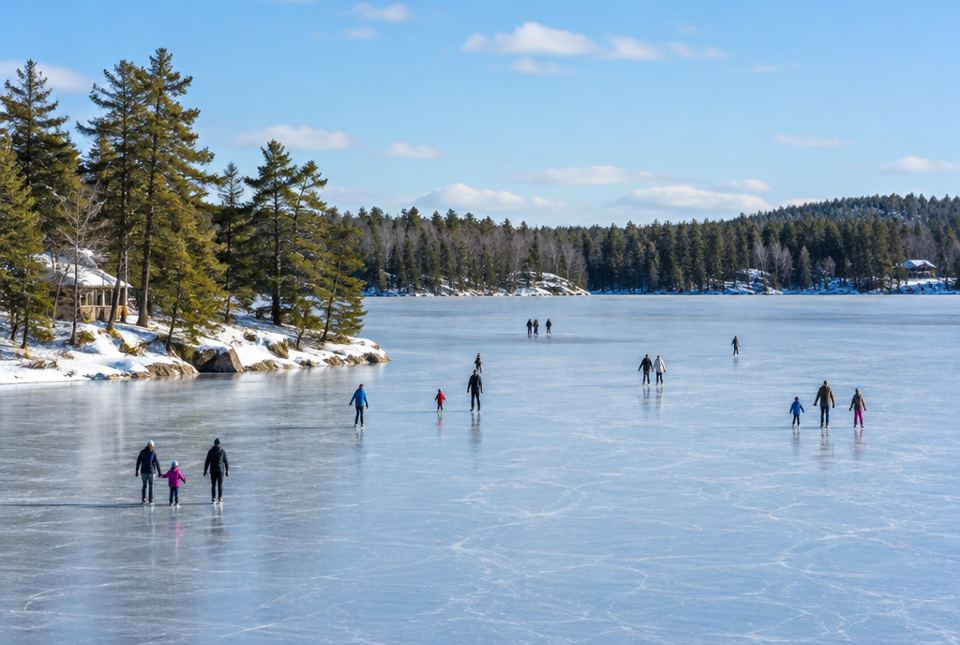 Skating is an individual activity you can also share with family. Winter weather doesn't have to be a barrier to being active. AI-generated image
| Kind of activity | Example | Why some people love it |
|---|
| Individual | Biking on a trail | You choose the pace and the time. You can beat your own best. |
| Small-group | Four square with friends | Lots of turns, lots of laughing, and quick games. |
| Lead-up game | 3-on-3 basketball | You touch the ball often and learn the real sport step by step. |
Your whole day counts
Canada has 24-hour movement guidelines for children and youth aged 5 to 17. They look at your whole day. An easy way to remember them is Sweat, Step, Sleep, Sit:
- Sweat: at least 60 minutes a day of moderate to vigorous activity. On at least 3 days a week, include vigorous activity and activities that make your muscles and bones stronger (like climbing, jumping and skipping).
- Step: several hours of light activity, like walking, helping in the garden or playing outside.
- Sleep: 9 to 11 hours of good sleep every night (for ages 5 to 13), with regular bedtimes and wake-up times.
- Sit: no more than 2 hours a day of screen time for fun, and fewer long stretches of sitting.
Your 60 active minutes don't have to happen all at once. They can add up through the day:
Moving helps your mind too
Being active is good for your heart, lungs, muscles and bones. It can also help your mental health. Many people find that being active helps them:
- feel calmer when they are stressed or worried,
- feel happier and have more energy,
- sleep better,
- focus better on schoolwork afterwards,
- feel proud and confident when they learn a new skill,
- make and keep friends.
Moving is one way to take care of your mental health. Sleeping well, eating well and talking to people you trust are others. If you often feel very sad or worried, talk to a grown-up you trust.
Helps and challenges in your world
Things around you can help you be active, or make it a challenge. Look at all three places in your life:
| Place | Things that can help | Things that can be a challenge |
|---|
| School | DPA, recess, gym class, intramurals and clubs, friends to play with | Indoor recess on rainy days, not feeling confident in a game |
| Home | A yard or open space, a skipping rope or ball, family who like to walk or bike | Screens, homework, small spaces, busy evenings |
| Community | Parks, trails, outdoor rinks, pools, community centres, free programs | Cost, needing a ride, the weather, not knowing anyone |
Reframe it: focus on your strengths
Your mindset is how you think about yourself. Sometimes our thoughts get stuck on what we can't do. Reframing means looking at the same thing in a more helpful way, starting with your strengths.
- Stuck: "I'm bad at sports." Reframed: "I'm great at keeping going. I'm still learning to catch."
- Stuck: "Everyone is faster than me." Reframed: "I'm faster than I was in September."
- Stuck: "I'll never get this." Reframed: "I can't do it yet. What is one small step?"
Worked exampleLet's find what makes it fun
Priya says: "I don't like gym. Big team games make me nervous because everyone sees when I drop the ball. But I love biking with my cousin and dancing to music." How can Priya find activities she enjoys?
- What does Priya enjoy? Being with a person she trusts (her cousin), music, and moving at her own pace.
- What is her challenge? Feeling nervous about mistakes in front of a big group.
- Match the activities: individual activities (biking, a dance video) and small-group games with one or two friends fit her well. A lead-up game like 2-on-2 means more turns and fewer people watching, so she can build skills and confidence.
- Reframe: Instead of "I'm bad at gym," Priya can say, "I'm good at dancing and biking, and I'm practising catching."
Priya can be active every day with biking, dancing and small-group games, and grow her confidence in lead-up games.
Worked exampleLet's check a day against Sweat, Step, Sleep, Sit
Liam's school day: 25 minutes of brisk walking to and from school (both ways together), 20 minutes of DPA, 15 minutes of tag at recess, 3 hours of video games after school, and 8 hours of sleep. How does his day compare with the guidelines?
- Sweat: 25 + 20 + 15 = 60 minutes of moderate to vigorous activity. He met the goal.
- Step: He walked and played, but 3 hours of gaming means a lot of the rest of his day was sitting.
- Sit: 3 hours of screen time for fun is more than 2 hours. One hour too many.
- Sleep: 8 hours is less than 9. He needs at least one more hour.
- Plan: Swap 1 hour of gaming for outdoor play or a walk with the dog, and go to bed one hour earlier.
Liam met Sweat but needs less screen time and more sleep.
Just for funWhy did the bicycle fall over?
Because it was two-tired! (Good thing you get 9 to 11 hours of sleep.)
Hands-on activityMy active week and a new-activity challenge
You need: paper, a pencil, a soft ball (a beach ball or playground ball), a skipping rope or string, two chairs and a grown-up or friend.
- Make a chart with 7 rows (one for each day) and these columns: Activity, Where (school, home or community), Kind (individual, small-group or lead-up), Minutes, Fun (1 to 5 stars).
- Fill it in every evening for one week.
- During the week, try one new activity of each kind:
- Individual: a skipping challenge or a dance video.
- Small-group: a game of catch, tag or four square chalked on the driveway.
- Lead-up game: newcomb. Tie a rope or string between two chairs at about the height of your chin. Stand on opposite sides. Catch the ball and throw it back over the rope. Score a point if the ball lands on the ground on the other side.
- At the end of the week, look at your chart: Which activities got the most stars? Where were you most active? What got in the way?
- Write one sentence about how you felt after being active (for example: calmer, happier, tired in a good way).
Safety: Play newcomb in a clear space away from windows and roads. Tie the rope so it is easy to see, and walk around it, never under or over it.
Your turn
1Name the three kinds of activities in this lesson and give one example of each.
Individual (e.g. biking), small-group (e.g. four square), lead-up game (e.g. 3-on-3 basketball or newcomb).
A simpler version of a sport with fewer players, a smaller space or easier rules, so players practise the skills.
3What do the four words Sweat, Step, Sleep, Sit remind you about?
Sweat: 60+ minutes of moderate to vigorous activity. Step: several hours of light activity. Sleep: 9 to 11 hours. Sit: no more than 2 hours of fun screen time.
4Name two ways being active can help your mental health.
Any two: feeling calmer, happier, more energy, better sleep, better focus, more confidence, making friends.
5Name one thing in your community that can help you be active.
Examples: a park, trail, outdoor rink, pool, community centre, a free program, a sports club.
6Reframe this thought: "I'm the worst skipper in my class."
Example: "I can do 10 skips in a row now, and I'm practising to get to 20." Look for an answer that starts with a strength or progress.
7Do it and check: Play newcomb for 5 minutes with a grown-up.
Look for: catching with two hands, throwing the ball over the rope, calling out the score fairly, and taking turns serving.
More practice: warm-up
1Is skipping rope alone an individual or small-group activity?
2How many minutes of moderate to vigorous activity do kids need each day?
3How many hours of sleep do kids aged 5 to 13 need each night?
4True or false: your 60 active minutes must all happen at the same time.
False. They can add up through the day.
5What is newcomb a lead-up game for?
More practice: on your own
1Maya plays 20 minutes of DPA, 20 minutes of soccer at recess and skates for 30 minutes after school. Did she meet the Sweat goal? Show your thinking.
Yes. 20 + 20 + 30 = 70 minutes, which is more than 60.
2Why might a lead-up game like 3-on-3 be better for learning basketball than a full 5-on-5 game?
With fewer players each person gets the ball more often, so they practise dribbling, passing and shooting more.
3Name one challenge to being active at home and a way around it.
Example: "Screens." Way around: set a timer and go outside when it rings, or play an active game first. Any matching pair works.
4Owen feels grumpy after a long day at school. How might a bike ride help?
Being active can help him feel calmer and happier, let go of stress and sleep better that night.
5Ella likes music and moving at her own pace. Suggest two activities she might enjoy, and explain.
Examples: dancing to music and skipping to a song. Both use music and let her choose her own pace.
Challenge
1Sam's Saturday: 4 hours of TV and games, 30 minutes of shooting baskets, 11 hours of sleep. Which guidelines did he meet and miss? Suggest one change.
Sleep: met (11 hours). Sweat: missed (30 minutes, not 60). Sit: missed (4 hours of screens, not 2 or less). Change: swap 2 hours of screens for outdoor play, like a family bike ride and a game of tag, to reach 60 active minutes and cut screen time.
2Design a lead-up game for soccer for 2 or 3 people in a backyard. Give the rules.
Example: 2-on-1 small goals. Use two shoes as a small goal at each end. Two players pass to each other and try to score; one defender tries to win the ball. Swap the defender after every goal. No shooting harder than a pass. Look for: fewer players, a small space and simple rules that practise passing and shooting.
3Your friend says, "Being active is only good for your muscles." Write a reply with two reasons.
Example: "It also helps your mind. Being active can help you feel calmer when you're stressed, sleep better, and feel proud when you learn a skill. It helps your heart, lungs and bones too."
Quiz
2. How many minutes of moderate to vigorous activity should kids get each day?
3. Which is an individual activity?
4. What does Sit in the guidelines say about screen time for fun?
5. Which thought is reframed to focus on strengths?
6. Which is a way being active can help your mental health?
Big idea: In Grade 5, students look at what makes physical activity enjoyable for them, try individual, small-group and lead-up activities, and identify factors at school, home and in the community that help or challenge daily activity. This lesson also introduces Canada's 24-Hour Movement Guidelines for Children and Youth (Sweat, Step, Sleep, Sit) and links being active with mental health.
How to help at home:
- Fill in the active-week chart together each evening. Look for patterns, not perfection.
- Ask "What made that fun?" after any active time. Enjoyment is the strongest reason children keep moving.
- Look up free or low-cost options near you: parks, trails, outdoor rinks, community centre drop-ins.
- Model reframing: "I'm not a great skater yet, but I'm getting steadier."
Common difficulties:
- "I'm not sporty." Many children who dislike big team games love individual or small-group activities. Every kind counts.
- Mixing up the guidelines. Use the four words: Sweat (60+ minutes), Step (light activity), Sleep (9 to 11 hours), Sit (2 hours or less of fun screen time).
- Comparing with others. Encourage comparing with their own past self.
Mental health note: This lesson presents activity as one helpful habit, not a cure. If your child often seems very sad, worried or withdrawn, talk with their teacher or your family doctor.
Social-emotional learning: Reframing thoughts around strengths builds positive motivation and perseverance and a healthy sense of identity; noticing how activity changes mood builds stress management skills; checking a day against the guidelines builds critical thinking.