A. Literacy Connections and Applications / C. Comprehension: Understanding and Responding to Texts · Understanding and Responding to TextsBefore and During Reading: What I Know and What I Predict
C2.1 C2.3 C2.2About 35 minutes
Learning goals- I can think about what I already know before I read.
- I can use a K-W-L chart to plan my reading.
- I can make predictions using what I know, text features and clues from the text.
- I can change (adjust) my prediction when I read new information.
Words to know
prior knowledge
What you already know before you read, from your life and from other texts.
background knowledge
Another name for prior knowledge.
prediction
A smart guess about what will happen or what you will learn, based on clues.
evidence
Clues or facts from the text that support your thinking.
confirm
To find out your prediction was right.
adjust
To change your thinking when you find new information.
K-W-L chart
A chart with three columns: what I Know, what I Wonder, and what I Learned.
Remember from Grade 2
In Grade 2 you made predictions using the title, cover and pictures, and you checked them as you read.
In Grade 3 you will switch on what you already know before reading, and you will make predictions using three kinds of clues: what you know, text features, and evidence from the words. You will also learn that changing your mind is what smart readers do!
Hook: Your brain is a closet
Imagine your brain is a big closet full of boxes. Each box holds things you know: a box for winter, a box for animals, a box for hockey...
Before you read, open the right box! If you are going to read about bears, open your bears box. What do you already know? Bears are big. Many bears sleep through the winter. Bears eat berries and fish. Now your brain is ready to hook new facts onto what you know. This is called activating prior knowledge.
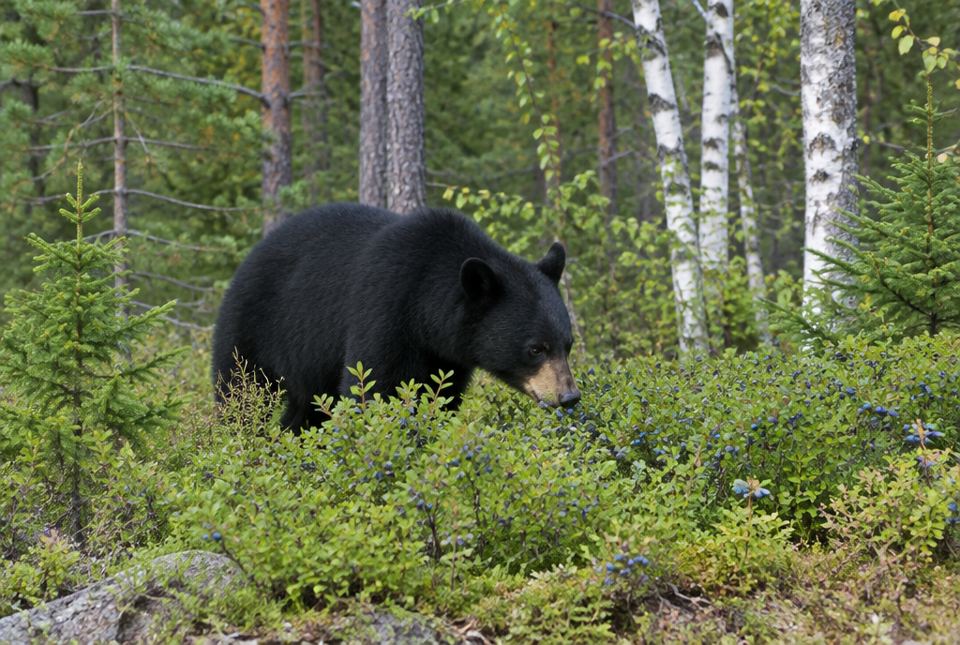 Open your bears box! What do you already know about black bears like this one, and what do you think they eat before winter? AI-generated imageBefore reading about bears, open your bears box. What you already know gives new facts something to hook onto. This is activating prior knowledge.
Use a K-W-L chart
A K-W-L chart helps you get ready to read an informational text.
- K: What I Know (before reading)
- W: What I Wonder (questions before reading; this gives you a purpose!)
- L: What I Learned (after reading)
Let's try it with a text called Monarchs on the Move.
| K: What I Know | W: What I Wonder | L: What I Learned |
|---|
| Monarchs are orange and black butterflies. | Where do monarchs go in winter? | They fly thousands of kilometres to Mexico. |
| Butterflies start as caterpillars. | What do monarch caterpillars eat? | They eat only milkweed leaves. |
| I've seen them in summer. | How do they survive a long trip? | They rest and drink nectar from flowers along the way. |
Monarchs on the Move
A Long Trip
Every fall, many monarch butterflies leave Canada. They fly south, thousands of kilometres, to the mountains of Mexico, where it is warm enough to survive the winter.
Food for the Journey
Along the way, monarchs stop to rest and drink nectar, a sweet juice found in flowers.
Milkweed Matters
Monarch caterpillars eat only one kind of plant: milkweed. Without milkweed, there would be no monarchs. Some families plant milkweed in their gardens to help.
Worked exampleLet's activate prior knowledge
Before reading Monarchs on the Move, what can you do to get your brain ready?
- Read the title: Monarchs on the Move. Move makes me think they travel.
- Open my butterfly box: I know monarchs are orange and black, and butterflies start as caterpillars.
- Make a connection: Geese fly south in fall. Maybe monarchs do too!
- Ask a question (W): Where do they go? Now I have a purpose: to find out!
I used the title, what I know about butterflies and geese, and a question to get ready. Now I can connect new facts to what I know.
Making predictions with three kinds of clues
A prediction is a smart guess. Good predictions use evidence:
- What I know (background knowledge): Raccoons like to get into garbage.
- Text features: the title, headings, pictures, captions, bold words.
- Clues in the words: what characters say and do, and what has happened so far.
A prediction sounds like: I predict ___ because ___.
Read in parts: The Sound in the Shed
Part 1
It was a cold January night. Ravi was brushing his teeth when he heard it: scritch, scratch, scritch. The sound came from the garden shed.
"Probably just the wind," said Dad.
But in the morning, Ravi saw tracks in the fresh snow leading to the shed. The tracks were small, with five long toes that looked like tiny hands.
Stop and predict: What is making the sound?
Worked exampleLet's predict, check and adjust
Prediction 1 (after the first paragraph): Ravi hears scritch, scratch. What could it be?
- Background knowledge: Mice make scratching sounds. I predict it is a mouse, because mice scratch and like to hide in sheds.
- Read on. New evidence: the tracks have five long toes that look like tiny hands.
- Background knowledge: Raccoon paws look like little hands! Mouse tracks are very tiny.
- Adjust: Now I predict it is a raccoon, because the tracks look like little hands.
I adjusted my prediction from a mouse to a raccoon because of new evidence. That is great reading!
Part 2
Dad opened the shed door slowly. A bag of birdseed had been ripped open, and seeds were everywhere. Behind a box, Ravi saw a fat, bushy tail with dark rings around it. Then, whoosh, the animal squeezed out through a gap in the wall and ran off.
"A raccoon!" said Dad. "It came in through that gap."
That afternoon, Ravi and Dad fixed the gap with a board. They put the birdseed in a metal bin with a tight lid.
Check: Was your prediction confirmed?
Yes! The ringed tail is evidence that it was a raccoon. The prediction is confirmed.
Just for funFunny but true: A raccoon's front paws have five long, bendy toes that grab like tiny hands. Raccoons can even open some lids and latches, which is why Ravi and Dad chose a metal bin with a tight lid!
Predictions don't have to be right
A prediction is a thinking tool, not a test. Changing it when you learn something new shows you are paying attention. Say: "At first I thought ___, but now I think ___ because ___."
Hands-on activityStop-and-predict bookmarks
You need: a chapter book or picture book you haven't read, sticky notes or paper strips, a pencil.
- Before reading, write a K-W-L chart (for a fact book) or look at the cover and title (for a story). Open your "brain box": what do you already know about this topic?
- Write a prediction: I predict ___ because ___.
- A grown-up puts 3 sticky notes at good stopping places. At each one, stop and write a new prediction or confirm/adjust your old one.
- After reading, look at your notes. Did you adjust any predictions? What evidence made you change your mind?
- For a fact book, fill in the L column of your K-W-L chart.
Your turn
1What does activate prior knowledge mean?
To think about what you already know about a topic before you read.
2What do the letters K, W and L stand for in a K-W-L chart?
K = What I Know, W = What I Wonder, L = What I Learned.
3Name the three kinds of clues you can use to make a prediction.
What I know (background knowledge), text features (title, headings, pictures), and clues in the words (evidence).
4In The Sound in the Shed, why did the reader change from mouse to raccoon?
Because the tracks had five long toes that looked like tiny hands, like raccoon paws. That was new evidence.
5What evidence in Part 2 confirms it was a raccoon?
The bushy tail with dark rings, and Dad says, "A raccoon!"
6Look at the heading Milkweed Matters. Before reading that section, what might you predict it is about?
That milkweed is important in some way, probably to monarchs.
7Finish this sentence frame with your own prediction about a book called The Lost Mitten: I predict ___ because ___.
Example: I predict a child loses a mitten in the snow and an animal finds it, because the title says it is lost and mittens are worn in winter. (Any prediction with a reason.)
More practice: warm-up
1Is a prediction a wild guess or a smart guess?
A smart guess that uses clues.
2Which K-W-L column do you fill in after reading?
3Where do monarch butterflies go in winter?
To the mountains of Mexico.
4What do monarch caterpillars eat?
To change your thinking when you get new information.
More practice: on your own
1You are going to read a book called Life in the Arctic. Name two things you might already know about the Arctic.
Examples: it is very cold; there is snow and ice; polar bears live there; Inuit have lived there for a very long time; in winter, the days are very short. (Any two true facts.)
2Write one W (wonder) question for Life in the Arctic. How does it give you a purpose?
Example: How do animals stay warm in the Arctic? It gives you something to look for while you read.
3Why did Ravi and Dad put the birdseed in a metal bin with a tight lid? Use what you know.
Because a raccoon can't rip open a metal bin or easily open a tight lid, so it won't get the seeds and won't come back for food.
4A story is called Mia's Worst Birthday Ever. The cover shows a girl smiling with a cake. Make a prediction that uses both clues.
Example: I predict that lots of things go wrong on Mia's birthday, but in the end it turns out happy, because the title says "worst" but the cover shows her smiling.
5Dad said the sound was probably the wind. Was he right? What evidence proved it?
No. The tracks in the snow, the ripped birdseed bag and the raccoon itself proved an animal made the sound.
Challenge
1How could knowing about geese help you understand the monarch text?
Geese fly south in the fall to warmer places and come back in spring. Knowing this helps you connect and understand that monarchs also migrate to escape the cold.
2Predict what Ravi might do the next time he hears a scratching sound at night. Use evidence from the story.
Example: I predict he will check for tracks in the snow, because that is how he figured it out last time. (Any prediction supported by the story.)
3Why is it a good thing, not a bad thing, to change your prediction while reading?
It shows you are paying attention to new evidence and thinking as you read. Good readers adjust their thinking; that is how understanding grows.
Quiz
1. Before reading, thinking about what you already know is called...
2. In a K-W-L chart, what goes in the W column?
3. Which prediction uses evidence?
4. If new information shows your prediction was wrong, you should...
5. Which is a text feature that can help you predict?
6. What do monarch caterpillars eat, according to the text?
What this lesson teaches: Grade 3 students activate prior knowledge from life and from other texts (C2.1), identify purposes for reading (C2.2), and make predictions using background knowledge, text features and evidence, then adjust their understanding (C2.3).
How to help at home:
- Before reading together, spend one minute on: "What do you already know about this?" and "What do you wonder?"
- Stop 2 or 3 times in a story and ask for a prediction with a because.
- Praise adjusted predictions: "You changed your mind because of that clue. That's exactly what good readers do!"
Common difficulties:
- Predictions without reasons. Use the frame I predict ___ because ___.
- Sticking to a wrong prediction. Some children feel embarrassed when a prediction is wrong. Make it clear predictions are thinking tools, not tests.
- Wild predictions ("aliens!") usually mean the child isn't using clues. Ask: "What in the book makes you think that?"
Safety: If you find a wild animal like a raccoon in a shed or garage, do not touch or corner it; give it a way out or call local animal services.