A. Heritage and Identity · Our Changing Roles and ResponsibilitiesFirst Nations, Métis and Inuit Families and Communities
A3 A3.2 A3.4About 35 minutes
Learning goals- I can say that First Nations, Métis and Inuit are the First Peoples of the land now called Canada.
- I can describe some important roles in First Nations, Métis and Inuit families and communities, like Elders.
- I can tell why caring for the land is an important responsibility.
- I can name a significant day that helps us learn and remember, like Orange Shirt Day.
Words to know
First Peoples
The first people to live on the land now called Canada: First Nations, Métis and Inuit. They are also called Indigenous peoples.
First Nations
Many different nations, each with its own language and culture, such as the Anishinaabe, Haudenosaunee and Cree.
Métis
A distinct Indigenous people with their own culture, history and language called Michif.
Inuit
Indigenous people whose homelands are in the North of what is now Canada. Many Inuit speak Inuktitut.
Elder
A person respected by the community for their knowledge, wisdom and teachings.
culture
A group's way of life: their language, stories, food, art, music, beliefs and celebrations.
The First Peoples
Long, long before there was a country called Canada, people lived on this land. They are the First Peoples: First Nations, Métis and Inuit. Today they are also called Indigenous peoples.
They are not just people from long ago. First Nations, Métis and Inuit people live all across Canada today. They live in cities, towns, First Nations communities and in the North. They are doctors, teachers, artists, builders, parents, kids and grandparents, just like other people. Maybe some are in your class!
| People | Something to know | One word or symbol |
|---|
| First Nations | There are many different First Nations, each with its own language and culture. In Ontario there are many, such as Anishinaabe and Haudenosaunee nations and the Cree. | Each nation has its own language, like Anishinaabemowin. |
| Métis | A distinct people with their own history and culture. | The Métis sash and the Michif language. |
| Inuit | Homelands are in the North, in places like Nunavut. | The inuksuk (stones stacked by Inuit people) and the Inuktitut language. |
They are not all the same
First Nations, Métis and Inuit are different peoples. Even among First Nations, each nation has its own language, stories and ways. It is respectful to use a person's or nation's own name when you can, the same way you like people to say your name correctly.
Family and community roles
In many First Nations, Métis and Inuit communities, family is very important, and it often includes many people: grandparents, aunts, uncles, cousins and other relatives. Children learn from many relatives, not only their parents.
Elders have a very important role. An Elder is someone the community respects for their knowledge and wisdom. Elders share stories, teachings, language and ways of caring for the land. Children show respect to Elders by listening carefully.
Everyone has a role. Grandparents teach, parents care and provide, children help and learn. Everyone's role helps the whole community.
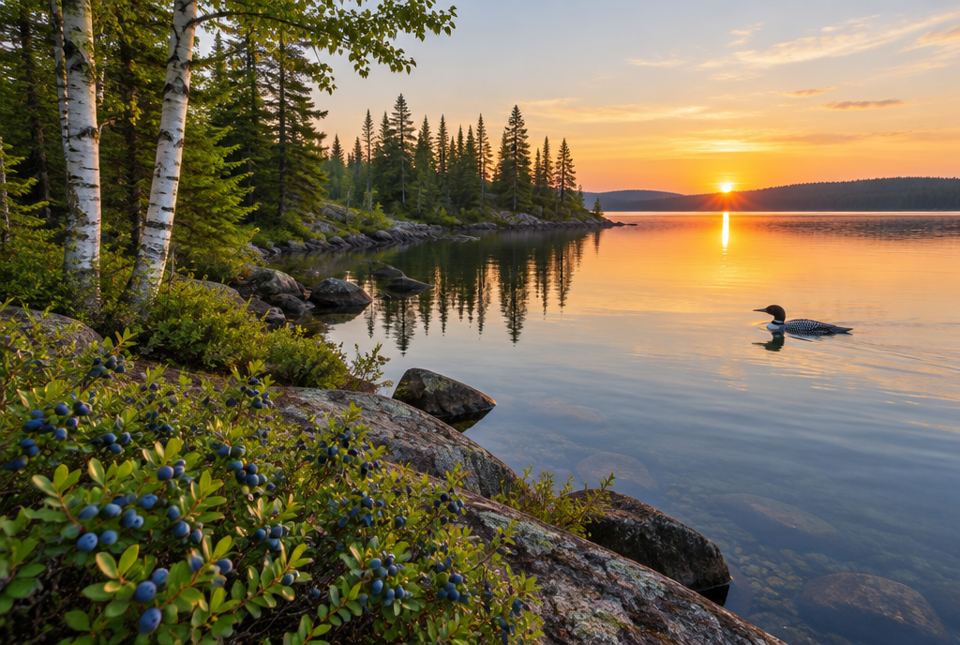 Elders often share teachings about caring for the land and water, the plants and the animals, like this lake, its blueberries and the loon. AI-generated imageIn many First Nations, Métis and Inuit communities, everyone has a role, and each role helps the whole community.
A responsibility to the land
Many First Nations, Métis and Inuit people teach that we have a relationship with the land: the earth, the water, the plants and the animals. The land gives us what we need, so we have a responsibility to take care of it.
Many Indigenous teachings talk about thinking about the people who will live many years from now, and leaving the land healthy for them. That is a responsibility we can all share.
A day to learn and remember: September 30
A long time ago, and until not very long ago, many First Nations, Métis and Inuit children were taken away from their families and sent to schools called residential schools. Many were not allowed to speak their languages or be with their families. This was wrong and unfair.
One girl named Phyllis Webstad wore a new orange shirt on her first day at one of these schools. It was taken away from her. Now, every year on September 30, many people wear orange for Orange Shirt Day, also called the National Day for Truth and Reconciliation. The words on many orange shirts say Every Child Matters.
Today, many First Nations, Métis and Inuit families are teaching their languages and cultures to their children again. Other important days are National Indigenous Peoples Day on June 21, a day to celebrate First Nations, Métis and Inuit cultures.
Worked exampleExample: What is the role? What is the responsibility?
Read the story. Name the roles and responsibilities you see.
Eli's grandmother is an Elder. On Saturday she takes Eli and his cousins to pick berries. She tells them to leave some berries for the birds and bears and for next year. The children listen carefully and help carry the baskets.
- Find the roles: Grandmother is an Elder and a grandmother. Eli and his cousins are grandchildren and learners.
- What is the Elder's responsibility? To teach the children how to pick berries in a good way.
- What is the children's responsibility? To listen carefully and help carry the baskets.
- What is everyone's responsibility to the land? To take only what they need and leave some for animals and for next year.
The Elder teaches, the children listen and help, and everyone takes care of the land by not taking more than they need.
Hands-on activityWear orange, say why, and take care of the land
Pick one or both:
A. Every Child Matters. Draw an orange shirt on paper and colour it. Inside it, write or say: Every child matters because ___. If it is near September 30, wear something orange and tell someone why.
B. Take only what you need. Go on a walk with a grown-up in a park or your yard. Look for one way people take care of the land, and one thing you can do (pick up litter with gloves, leave plants and animal homes alone, turn off the tap while brushing your teeth at home).
Talk about it: "Who in our family teaches us things, like an Elder teaches?"
Your turn
1Who are the First Peoples of the land now called Canada?
First Nations, Métis and Inuit peoples.
2True or false: First Nations, Métis and Inuit people only lived long ago.
False. First Nations, Métis and Inuit people live all across Canada today.
3What is the role of an Elder?
To share knowledge, stories and teachings. The community respects Elders for their wisdom.
4How can children show respect to an Elder?
By listening carefully, being polite and patient.
5Why do many people wear orange on September 30?
To remember the children who were sent to residential schools, and to show that Every Child Matters.
6Name one way to take care of the land.
Examples: don't litter, take only what you need, leave animal homes alone, don't waste water.
7What do we celebrate on June 21?
National Indigenous Peoples Day, a day to celebrate First Nations, Métis and Inuit cultures.
More practice: warm-up
1Name the three groups of Indigenous peoples in Canada.
First Nations, Métis and Inuit.
2What colour do many people wear on September 30?
3What words are written on many orange shirts?
Stones stacked by Inuit people.
5True or false: All First Nations speak the same language.
False. Each nation has its own language.
More practice: on your own
1Why is it respectful to use a nation's own name, like Anishinaabe or Haudenosaunee?
Because each nation is different, with its own language and culture. Using the right name is like saying someone's name correctly.
2In many First Nations, Métis and Inuit families, who might teach a child? Name three.
Examples: grandparents, aunts, uncles, cousins, parents, Elders. Family often includes many relatives, and they all help children learn.
3What was wrong with residential schools? Say it in your own words.
Children were taken away from their families and many were not allowed to speak their languages. That was wrong and unfair, because every child should be safe with their family and proud of who they are.
4When picking berries, why might an Elder say to leave some behind?
So there are berries for animals and plants can grow next year. Taking only what you need is a way to care for the land.
The girl whose new orange shirt was taken away at a residential school. Her story is why people wear orange on September 30.
Challenge
1How are an Elder's responsibilities like your teacher's? How might they be different?
Alike: both share knowledge and help children learn. Different: an Elder is recognized by the community and may teach language, stories, ceremonies and how to care for the land. A teacher is trained to teach at school. Both deserve respect.
2Why do you think it matters that children today learn their families' languages again?
Language connects children to their family, Elders, stories and culture. Learning it again helps them feel proud of who they are (their identity).
3What is one thing you can do to show that every child matters?
Answers will vary. Examples: include others, learn a word in another language, listen to someone's story, wear orange on September 30 and explain why.
Quiz
1. Who are the First Peoples of the land now called Canada?
3. What role does an Elder have?
4. What do the words on many orange shirts say?
5. Orange Shirt Day (the National Day for Truth and Reconciliation) is on...
6. Which action shows care for the land?
7. The Métis have their own language called...
Big idea: First Nations, Métis and Inuit are the First Peoples of the land now called Canada. They are distinct peoples who live across Canada today. This lesson connects to Grade 1 roles and relationships: extended family and Elders have important roles, and many Indigenous teachings describe a responsibility to care for the land. The 2023 revision of Ontario's Grade 1 to 3 social studies curriculum added required learning about First Nations, Métis and Inuit families, communities and relationship with the land, and an introduction to residential schools.
How to help at home:
- Read picture books by First Nations, Métis and Inuit authors. When We Were Alone by David A. Robertson is a gentle Grade 1 introduction to residential schools. Many libraries have collections of Indigenous-authored children's books.
- Find out whose traditional territory you live on (see the Local Community unit) and talk about it.
- Wear orange together on September 30.
Talking about residential schools: keep it simple and true. Children were taken from their families, which was wrong; families and communities are now reclaiming their languages and cultures. Reassure your child that they are safe. You don't need to share upsetting details at this age.
Avoiding stereotypes: avoid "dress-up" costumes, headdresses or "playing Indian", and avoid talking about Indigenous people only in the past tense. Use specific names (Anishinaabe, Haudenosaunee, Cree, Métis, Inuit) when you know them. If your family is First Nations, Métis or Inuit, your own family's teachings and words come first.