E. Earth and Space Systems · Conservation of Energy and ResourcesFossil Fuels, the Atmosphere and Climate Change
E2.6 A1.2 A1.5About 45 minutes
Learning goals- I can explain that burning fossil fuels adds carbon dioxide to the atmosphere.
- I can explain how greenhouse gases trap heat.
- I can explain how more greenhouse gases contribute to climate change.
- I can tell the difference between weather and climate.
- I can use a model to show how a cover traps heat, and tell how the model is different from the real atmosphere.
Words to know
atmosphere
The layer of gases (air) that surrounds the Earth.
carbon dioxide
A gas with no colour or smell. It is released when fuels burn and when we breathe out. Plants take it in.
greenhouse gases
Gases in the atmosphere, like carbon dioxide and methane, that trap heat near Earth's surface.
greenhouse effect
The way greenhouse gases trap heat and keep Earth warm.
climate
The usual weather of a place over many years.
climate change
A long-term change in Earth's climate. Today it is mostly caused by extra greenhouse gases from burning fossil fuels.
model
Something that shows how a real thing works, often in a simpler or smaller way.
A blanket for the whole planet
On a cold winter night, you pull a blanket over yourself. The blanket doesn't make heat, but it traps the heat from your body and keeps you warm. Add a second thick blanket and you might get too hot.
Earth has a kind of blanket too: the atmosphere. In this lesson you'll find out how burning fossil fuels is making that blanket "thicker", and why that matters.
What happens when fossil fuels burn
Coal, oil (gasoline, diesel) and natural gas store chemical energy. They are made mostly of carbon, from the ancient living things they formed from.
When they burn in a car engine, a furnace or a power station, their chemical energy changes into heat, light and motion. But burning also releases a gas called carbon dioxide into the air. Carbon that was buried underground for millions of years goes into the atmosphere in a very short time.
Natural gas is mostly a gas called methane. When methane leaks into the air without burning, it is also a gas that traps heat.
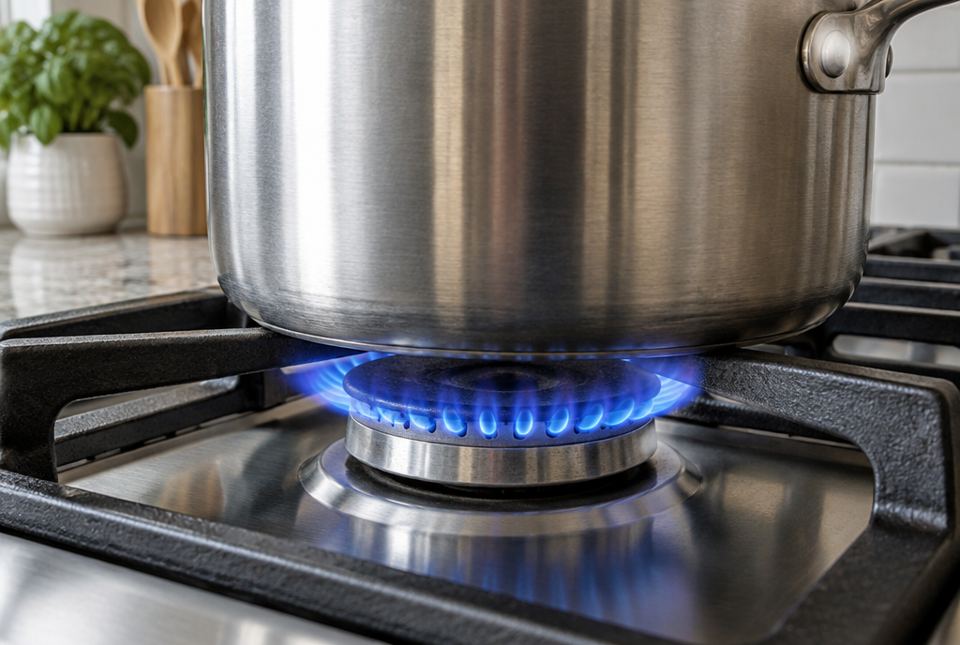 Natural gas is a fossil fuel. When it burns, its chemical energy becomes heat, and it also releases carbon dioxide into the air. AI-generated imageCarbon that took millions of years to get buried underground goes back into the air in a short time when fossil fuels burn.
The greenhouse effect
Sunlight passes through the atmosphere and warms the Earth's surface. The warm Earth then gives off heat. Some of that heat escapes to space, but some is trapped by greenhouse gases, like carbon dioxide, methane and water vapour.
This is called the greenhouse effect, and we need it! Without any greenhouse gases, Earth would be far too cold for most living things.
The problem is too much. Burning fossil fuels keeps adding more carbon dioxide. More greenhouse gases trap more heat, like adding extra blankets. Scientists have measured that the amount of carbon dioxide in the atmosphere has gone up, and that Earth's average temperature is rising. This is changing Earth's climate.
Weather or climate?
Weather is what the air is like today: a snowstorm on Tuesday, a sunny Saturday.
Climate is the usual weather of a place over many years. Ontario's climate has cold, snowy winters and warm summers.
Climate change is a long-term change in that usual pattern. One very cold week does not mean climate change isn't happening, because climate is about many years, not one week.
Some changes scientists have observed in Canada
- On average, temperatures are getting warmer, and winters are warming fastest.
- Sea ice in the Arctic is shrinking, and permafrost (ground that used to stay frozen all year) is thawing in many places.
- These changes affect people. For example, many Inuit travel and hunt on sea ice, and thinner or less predictable ice can make travel more dangerous.
- Climate change can make some events, like heat waves and wildfires, more likely.
Plants help
Trees and other plants take in carbon dioxide from the air to make their food. Forests and wetlands store a lot of carbon. When forests are cut down and burned, that carbon goes back into the air.
Worked exampleLet's follow the carbon
Explain step by step how driving a gasoline car in Ontario is connected to climate change.
- Gasoline is made from oil, a fossil fuel that stores chemical energy and contains carbon.
- The engine burns the gasoline. Its chemical energy changes into motion (plus heat and sound).
- Burning releases carbon dioxide out of the tailpipe and into the atmosphere.
- Carbon dioxide is a greenhouse gas. More of it traps more heat.
- Over many years, more trapped heat warms Earth's climate: climate change.
Burning gasoline → more carbon dioxide in the atmosphere → more heat trapped → climate change. This is one reason people choose to walk, bike, take transit, carpool, or drive cars that use less fuel.
Just for funWhat's the difference between weather and climate?
Weather is like your mood today. Climate is like your personality over many years!
Hands-on activityModel: a cover that traps heat
You need: 2 ice cubes the same size from the same tray, 2 small plates the same kind, a clear plastic container or clear bowl big enough to cover one plate upside down, a sunny window, a clock.
- Question: Does a clear cover make the space underneath warmer in the sunshine?
- Put one ice cube on each plate. Put both plates side by side in the same sunny window.
- Cover one plate with the clear container. Leave the other uncovered.
- Check every 5 minutes. Record which ice cube has melted more.
- Conclude: which one melted faster? Why?
- Think about the model (A1.5): how is the clear cover like the atmosphere? How is it different?
What to look for: in sunshine, the covered ice cube usually melts faster. Sunlight passes through the clear cover and warms the air and plate inside, and the cover traps the warm air. That is like greenhouse gases trapping heat. How it's different: the real atmosphere has no lid; greenhouse gases trap heat in a different way, by soaking up heat given off by the Earth. A model helps us think, but it isn't exactly the real thing.
Safety: use plastic, not glass, if you can. If you only have glass, a grown-up should place and remove it. Don't suck on the ice. Wipe up the water when you're done.
Your turn
1What are fossil fuels made from?
The remains of plants and tiny sea creatures that lived millions of years ago.
2What gas is released when fossil fuels burn?
The layer of gases (air) around the Earth.
4What do greenhouse gases do?
They trap heat near Earth's surface.
5What is the difference between weather and climate?
Weather is what the air is like on one day. Climate is the usual weather of a place over many years.
6Name one change scientists have observed in Canada that is linked to climate change.
Any one: warmer average temperatures, especially in winter; Arctic sea ice shrinking; permafrost thawing; more heat waves or wildfires in some places.
More practice: warm-up
1True or false: burning gasoline releases carbon dioxide.
2True or false: without any greenhouse gases, Earth would be much colder.
True. We need some greenhouse gases.
3True or false: climate means the weather on one day.
False. Climate is the usual weather over many years.
4True or false: trees take in carbon dioxide.
5True or false: fossil fuels are renewable.
False. They are non-renewable.
More practice: on your own
1Explain the chain from a furnace burning natural gas to climate change.
The furnace burns natural gas (a fossil fuel) → it releases carbon dioxide into the atmosphere → more carbon dioxide traps more heat → over many years Earth's climate warms: climate change.
2Why is a blanket a good model for greenhouse gases? Give one way it is not exactly the same.
Like: a blanket traps heat and keeps you warm, just as greenhouse gases trap heat near Earth. Different: the atmosphere is made of gases that sunlight passes through, and Earth has no real blanket; the gases soak up heat given off by the Earth.
3Why does cutting down and burning forests add to climate change?
Trees take in carbon dioxide. Fewer trees means less is taken in, and burning them releases the carbon they stored as carbon dioxide.
4In the ice cube model, the covered ice melted in 25 minutes and the uncovered ice in 35 minutes. Which space was warmer? Why?
The covered space was warmer, because the cover trapped the warm air that the sunlight heated. That is like greenhouse gases trapping heat.
5How might thinner sea ice affect Inuit communities?
Many Inuit travel and hunt on sea ice. Thinner or less predictable ice can make travel more dangerous and harder to plan.
Challenge
1Ontario stopped burning coal to make electricity in 2014. How does this help the atmosphere?
Burning coal releases carbon dioxide (and air pollution). Making electricity without coal means less carbon dioxide goes into the atmosphere from making electricity, so less extra heat is trapped.
2Kai says, "It was really cold last week, so climate change isn't real." How would you answer?
One cold week is weather. Climate is the pattern over many years. Earth's average temperature over many years is rising, even though there are still cold days and weeks.
3A family heats their home with a natural gas furnace. Give two ways they could stay warm in winter while releasing less carbon dioxide.
Any two: lower the thermostat a little and wear a sweater; seal drafts around doors and windows; add insulation; lower the heat at night and when nobody is home; switch to a heating system that uses electricity made with little carbon dioxide (for example, a heat pump).
Quiz
1. When fossil fuels burn, they release...
4. More carbon dioxide in the atmosphere leads to...
5. Which of these takes in carbon dioxide from the air?
6. Why do we need some greenhouse gases?
Big idea (E2.6): using energy from fossil fuels releases carbon dioxide (and methane from leaks), changing the composition of the atmosphere; more greenhouse gases trap more heat, contributing to climate change. The ice-cube activity is a model (A1.2), and children explain its strengths and limits (A1.5).
How to help: this topic can worry some children. Keep the tone calm and hopeful: scientists understand the problem, and people, communities and governments are working on solutions (next lessons). Focus on actions your family can take.
Common difficulties:
- Mixing up weather and climate.
- Thinking the greenhouse effect is all bad. Some is needed; the problem is the extra amount.
- Confusing climate change with the ozone hole. They are different problems.
- Thinking the model is exactly how the atmosphere works. A clear lid traps warm air; greenhouse gases absorb heat given off by the Earth.
We have not included numbers about how much carbon dioxide or temperature has changed. If your child wants numbers, Environment and Climate Change Canada and NASA publish current, reliable data.
Safety: use a plastic container rather than glass; no sucking on ice.