B. Foundations of Language · Spelling, Grammar and PunctuationColons for Lists and a Grade 5 Editing Checklist
B3.3 D2.6 A1.2About 45 minutes
Learning goals- I can use a colon to introduce a list after a complete sentence.
- I can tell when a colon is not needed before a list.
- I can use commas to separate the items in a list.
- I can edit my writing with a Grade 5 checklist and set a goal for next time.
Words to know
colon
A punctuation mark ( : ) that can introduce a list, an explanation or an example.
complete sentence
A group of words with a subject, a verb and a complete thought.
list
A series of items, usually separated by commas.
edit
To check and correct writing for spelling, punctuation, grammar and format.
format
How a piece of writing is set up on the page: title, paragraphs, spacing, headings.
A new punctuation mark
You've already seen colons in times, like 7:30. In Grade 5 you'll use a colon in a sentence to introduce a list.
For winter camp, bring three things: a warm toque, waterproof mittens and a sleeping bag.
The colon works like a drumroll. It says: Here comes the list!
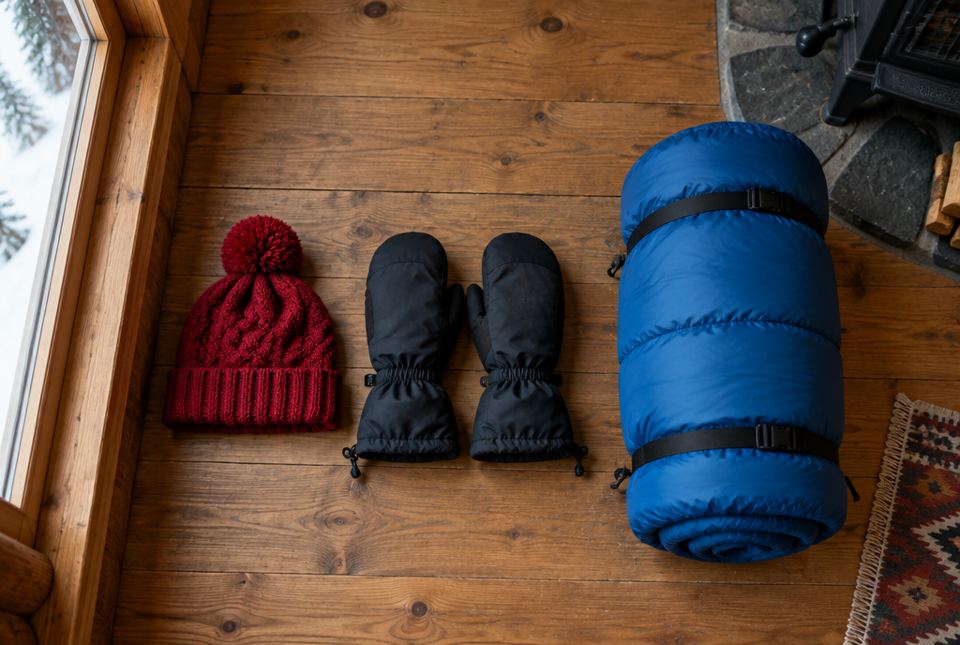 Three things for winter camp: a warm toque, waterproof mittens and a sleeping bag. A colon can introduce a list like this one. AI-generated image
The colon rule
Use a colon before a list only when the words before the colon make a complete sentence.
- Correct: We saw many animals: a moose, two foxes and a heron. (We saw many animals. is a complete sentence.)
- Not correct: We saw: a moose, two foxes and a heron. (We saw. is not complete. Saw what?)
- Fix: We saw a moose, two foxes and a heron. (No colon needed!)
Don't put a colon right after a verb (are, is, need, include) or after a preposition (of, for, to). Words like the following or these are good clues that a colon fits: Please bring the following: ...
The cover-up test
Cover the list with your hand. Read only the words before the colon, and put a period at the end. Is it a complete sentence? Then the colon is correct. If not, take the colon out.
Worked exampleLet's test two colons
Which sentence uses the colon correctly? (A) My favourite seasons are: spring and fall. (B) I have two favourite seasons: spring and fall.
- Cover the list in (A): My favourite seasons are. That's not complete. Are what? ✗
- Cover the list in (B): I have two favourite seasons. That's a complete sentence. ✓
- Fix (A) by removing the colon: My favourite seasons are spring and fall.
(B) is correct. (A) needs no colon.
Commas in a list
After the colon, separate the list items with commas: a toque, mittens and a sleeping bag. Many writers also put a comma before the last and (a toque, mittens, and a sleeping bag). Both are accepted; just be consistent in one piece of writing. Your teacher may tell you which style to use.
If the list is a list of phrases or short items, don't capitalize the first item after the colon (unless it's a proper noun).
Your Grade 5 editing checklist
In Grade 4 you edited with CUPS. In Grade 5, add everything you've learned this year. Read your writing several times, looking for one kind of mistake each time:
| Check | Ask yourself |
|---|
| Capitals | Sentence starts, names, proper adjectives (Canadian, Inuit), titles, I? |
| Usage and grammar | Any fragments, run-ons or comma splices? Right pronouns (me/I, themselves)? Correlative pairs matched (neither...nor)? |
| Punctuation | End marks? Commas in compound and compound-complex sentences, around appositives, after opening phrases? Colons only after complete sentences? |
| Spelling | Tricky suffixes (-able/-ible, -ence/-ance)? Confused words (than/then, affect/effect)? Canadian spelling? |
| Format | Title? Paragraphs indented or spaced? Headings and fonts easy to read? |
Worked exampleLet's edit a paragraph
Edit: last saturday my family went to the Royal Ontario Museum, we saw: dinosaur bones, a totem pole and egyptian mummies. My little brother liked the dinosaurs more then the mummies.
- Capitals: last → Last; saturday → Saturday; egyptian is a proper adjective → Egyptian.
- Usage: ...Royal Ontario Museum, we saw... is a comma splice. Make two sentences.
- Punctuation: We saw: isn't complete. Remove the colon, or add words to make a complete sentence before it.
- Spelling: more then compares, so → than.
Last Saturday my family went to the Royal Ontario Museum. We saw many amazing things: dinosaur bones, a totem pole and Egyptian mummies. My little brother liked the dinosaurs more than the mummies.
Just for funThings a colon is great at: lists, drumrolls and dramatic pauses.
Things a colon is bad at: telling knock-knock jokes. It always gives away the answer!
Hands-on activityPacking list and edit
You need: paper, a pencil, and a piece of your own writing from this month.
- Imagine you're going to a winter camp. Write three sentences that each use a colon to introduce a list (clothes, food, games). Use the cover-up test on each.
- Write one list sentence that does not need a colon.
- Now take your own writing. Edit it five times, one row of the checklist each time. Use a different coloured pencil for each pass if you have them.
- At the bottom, write: The mistake I made most was ______. Next time I will ______.
- Share your goal with a grown-up.
Your turn
1Is the colon correct? I packed three snacks: an apple, crackers and cheese.
Yes. I packed three snacks. is a complete sentence.
2Is the colon correct? My chores include: dishes, laundry and feeding the cat.
No. My chores include. isn't complete. Remove the colon: My chores include dishes, laundry and feeding the cat.
3Add a colon: Canada has three territories Yukon, the Northwest Territories and Nunavut.
Canada has three territories: Yukon, the Northwest Territories and Nunavut.
4Rewrite so a colon is correct: For the science fair, we need glue, markers and poster board.
Example: For the science fair, we need three supplies: glue, markers and poster board.
5Fix the capital: We sang songs in three languages: english, french and Cree.
English and French are proper nouns: ...three languages: English, French and Cree.
6What does each letter of CUPS stand for?
Capitals, Usage, Punctuation, Spelling.
7Why should you read your writing several times when editing, looking for one kind of mistake each time?
It's hard to notice everything at once. Focusing on one thing (like capitals) each time helps you catch more mistakes.
More practice: warm-up
1What does a colon look like?
Two dots, one above the other: :
2What do you put between items in a list?
3Must the words before a list colon be a complete sentence?
4Is a colon correct after are? The colours are: red and white.
No. Remove it: The colours are red and white.
5Name a phrase that often comes before a list colon.
the following (or these things, three items...)
More practice: on your own
1Fix: For the bake sale, bring: muffins, cookies or squares.
For the bake sale, bring muffins, cookies or squares. (no colon) OR For the bake sale, bring one of these: muffins, cookies or squares.
2Write a sentence with a colon listing three Canadian provinces you'd like to visit.
Example: I would like to visit three provinces: Nova Scotia, Manitoba and British Columbia.
3Edit for one error in each CUPS area: on monday me and Jo went to the libary, we borrowed books.
On Monday Jo and I went to the library. We borrowed books. C: On, Monday. U: Jo and I. P: fix the comma splice. S: library.
4What's the difference between these? Bring these: a toque and mitts. / Bring a toque and mitts.
Both are correct. The first has a complete sentence (Bring these.) before the colon. The second has no colon because Bring is followed directly by the list.
5Your teacher says your writing is easy to read but has many comma splices. Write a goal.
Example: Next time I will check every comma: if there's a whole sentence on both sides, I'll add a joining word or use a period.
Challenge
1Write a sentence that uses a colon to introduce a list, an appositive with commas, and a proper adjective.
Example: Mrs. Bell, our music teacher, taught us three Canadian songs: "O Canada," a fiddle tune and a lullaby. Colon after a complete sentence; appositive our music teacher set off by commas; proper adjective Canadian.
2Edit fully: We needed the following for our project glue scissors and a map of ontario, then we started.
We needed the following for our project: glue, scissors and a map of Ontario. Then we started. (Colon after the complete sentence; commas between list items; capital for Ontario; the comma splice becomes two sentences.)
3Explain why this colon is wrong and fix it two ways: The ingredients for this bannock recipe are: flour, baking powder, salt and water.
The ingredients for this bannock recipe are isn't a complete sentence (are what?). Fix 1: remove the colon: The ingredients for this bannock recipe are flour, baking powder, salt and water. Fix 2: make a complete sentence before it: This bannock recipe uses four ingredients: flour, baking powder, salt and water.
Quiz
1. Which sentence uses a colon correctly?
2. What must come before a colon that introduces a list?
3. Which sentence needs no colon?
4. What separates the items in a list?
5. In the editing checklist, which area checks than/then?
6. Why edit for one kind of mistake at a time?
Big idea (B3.3, D2.6, A1.2): The Grade 5 curriculum asks students to use colons for introducing a list after a complete sentence, and to edit drafts for spelling, punctuation, grammar and format. Reflecting on their most common mistakes and setting a goal builds the metacognitive skills in Strand A.
How to help at home:
- Write a packing or grocery list sentence together with a colon, and do the cover-up test.
- When editing homework, use the checklist one row at a time rather than "fixing everything" at once.
- Ask your child what their personal editing goal is, and check just for that.
Common difficulties:
- Colon after a verb (The winners are: ...). The cover-up test catches it.
- Capitalizing the first list item after a colon. Not needed unless it's a proper noun.
- Inconsistent list commas. Whether or not they use a comma before and, they should be consistent.
- Editing fatigue. Five short passes are better than one long one.