B. People and Environments · Living and Working in OntarioFirst Nations Communities in Ontario Today
B3 B1.1 B1.2About 40 minutes
Learning goals- I can name some First Nations in Ontario and some of their communities.
- I can describe how life, land use and jobs in a First Nations community today connect to the land.
- I can explain that First Nations have their own governments and treaty relationships.
- I can talk about First Nations communities respectfully, without stereotypes.
Words to know
First Nations
The first peoples of the land now called Canada, other than the Inuit and Métis. There are many different First Nations, each with its own language and culture.
Indigenous
The first peoples of a land and their descendants. In Canada, Indigenous peoples are First Nations, Inuit and Métis.
reserve
Land set aside under Canadian law for the use of a First Nation. Many First Nations communities are on reserves.
chief and council
The leaders of a First Nation government. They are chosen by the community.
treaty
A formal agreement between First Nations and the Crown (the government) about sharing the land and how to live together.
traditional territory
The lands a First Nation has lived on, used and cared for since long ago.
Remember from Grade 1 and 2
In Grade 1 you learned that every community in Ontario is on the traditional territory of Indigenous peoples. In Grade 2 you learned about an Inuit community, Iqaluit, today.
Today we visit some First Nations communities in Ontario as they are now: their land, their homes and their jobs.
First Nations in Ontario
- There are more than 130 First Nations communities in Ontario.
- More Indigenous people live in Ontario than in any other province. Many live in First Nations communities, and many live in cities like Toronto, Thunder Bay and Ottawa.
- There are many different nations, each with its own language and culture. Some of the First Nations in Ontario are:
- Anishinaabe peoples, including Ojibwe, Odawa, Potawatomi, Algonquin and Mississauga
- Cree (including the Mushkegowuk Cree near James Bay) and Oji-Cree
- Haudenosaunee peoples: Mohawk, Oneida, Onondaga, Cayuga, Seneca and Tuscarora
- Lenape (Delaware)
Métis and Inuit people live in Ontario too. For example, there is a historic Métis community in Sault Ste. Marie, and Ottawa has a large Inuit community.
| Community | Where and what the land is like | Some things about life there today |
|---|
| Six Nations of the Grand River | near Brantford, in the Great Lakes–St. Lawrence Lowlands; farmland along the Grand River | the largest First Nation in Canada by population; Haudenosaunee people; schools that teach in Mohawk and Cayuga; farms, businesses, a police service, sports and festivals |
| Wiikwemkoong Unceded Territory | on Manitoulin Island in Lake Huron; forests, shoreline and fields | Anishinaabe people; fishing, tourism, schools, a health centre and a famous summer powwow |
| Attawapiskat First Nation | near James Bay, in the Hudson Bay Lowlands; flat, wet land and a large river | Cree people; reached by plane all year, by winter road in the coldest months; hunting geese and caribou and fishing are important; jobs at the school, health centre and band office |
| Fort Severn First Nation | on the coast of Hudson Bay; Ontario's most northern community | Cree people; a small fly-in community; hunting, fishing and trapping on the land |
Government and services
Each First Nation has its own government, usually called chief and council. They are chosen by the community. A First Nation is not a municipality.
Like a town council, a First Nation government looks after many services: a school, a health centre, housing, roads, water, a fire hall, recreation and more. Some First Nations have their own police services.
First Nations also have special relationships with Canada through treaties. Ontario is covered by more than 40 treaties. For example, much of northern Ontario is covered by Treaty 9, and parts of the land around Lake Huron and Lake Superior are covered by the Robinson Treaties of 1850. Wiikwemkoong calls itself unceded because its land was never given up in a treaty: its leaders refused to sign the 1862 treaty that gave up most of Manitoulin Island.
Living with the land today
First Nations communities live in modern homes, go to school, use phones and computers, play hockey, and shop at stores, just like other communities. Many people also keep strong connections to the land:
- Hunting, fishing, trapping and gathering plants and medicines. Treaties protect these rights in many areas.
- Harvesting wild rice (manoomin in Anishinaabemowin) from canoes in late summer, in some Anishinaabe communities.
- Teaching children their language and the knowledge of the land from Elders.
- Caring for the land and water as land and water protectors, guardians or stewards.
Jobs in First Nations communities include teachers, nurses, police officers, builders, store owners, artists, tourism guides, forestry and mining workers, and people who run the band office.
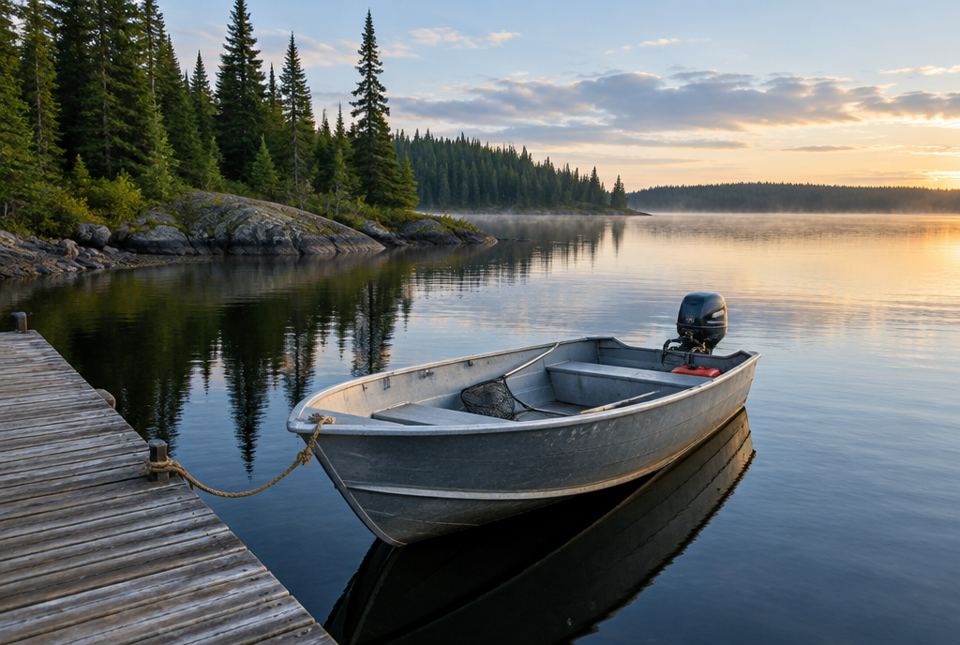 Fishing on lakes and rivers is one way many First Nations people keep their connection to the land and water today. AI-generated image
Speaking respectfully
- Use the name a community uses for itself, like Wiikwemkoong or Six Nations of the Grand River.
- Remember that First Nations are different from each other. Cree, Anishinaabe and Haudenosaunee peoples have different languages and cultures.
- First Nations people live today, not only long ago. They are doctors, hockey players, scientists, artists, and Grade 3 students like you.
- Some things, like ceremonies, are sacred. It is respectful to learn about them only in the ways communities choose to share.
Worked exampleLet's connect land and life in a community
Attawapiskat First Nation is near James Bay in the Hudson Bay Lowlands. How does the land affect life there?
- The land is flat and wet, with many wetlands and long, cold winters. There is no year-round road.
- So people travel by plane, and in the coldest months by a winter road built over frozen ground and rivers. Food, fuel and building supplies cost more because they are flown or trucked a long way.
- The land and rivers are home to geese, caribou and fish, so hunting and fishing are important for food and culture.
- Many jobs are in community services: the school, the health centre, the band office and housing.
The wet, far-north land affects travel, costs, food and jobs in Attawapiskat, and the community keeps a strong connection to the land through hunting and fishing.
Just for funFun fact: Ontario has polar bears! They live along the far-north coast of Hudson Bay. So in Ontario, you can find both busy city streets and polar bears.
Worked exampleLet's compare two communities
Compare Six Nations of the Grand River and Attawapiskat First Nation.
- Same: both are First Nations with their own chief and council, schools and health services, and both keep their languages and cultures alive.
- Different land: Six Nations is in the south, on fertile farmland near cities. Attawapiskat is in the far north, on wet lowlands.
- Different travel: Six Nations has roads to nearby cities like Brantford and Hamilton. Attawapiskat is reached by plane or winter road.
- Different nations: Six Nations people are Haudenosaunee. Attawapiskat people are Cree.
Both are strong First Nations communities, but the land and location make daily life, travel and jobs different.
How people travel to and from each community. The far-north land has no year-round road, so Attawapiskat depends on planes and a winter road.Hands-on activityWhose land am I on?
You need: a grown-up, a computer or tablet, paper and pencil crayons.
- With a grown-up, search for the treaty or traditional territory where you live. Many school boards and municipalities have a land acknowledgement on their website that names it. The Ontario government also has a treaty map online.
- Write down the name of the treaty (if there is one) and the First Nations whose traditional territory it is.
- Find the nearest First Nations community to your home on a map. How far is it, using the map scale?
- Look at that community's own website, if it has one. Write down two things you learned (for example, its language, a festival, a business, or a service it runs).
- Draw a picture of the land there: is it forest, farmland, shoreline or wetland?
What to look for: a correct treaty or territory name, a nearby community found on a map, two facts from the community's own information, and respectful language.
Your turn
1About how many First Nations communities are there in Ontario?
2Name two First Nations peoples in Ontario.
Any two: Anishinaabe (Ojibwe, Odawa, Potawatomi, Algonquin, Mississauga), Cree, Oji-Cree, Haudenosaunee (Mohawk, Oneida, Onondaga, Cayuga, Seneca, Tuscarora), Lenape.
3What do we call the leaders of a First Nation government?
A formal agreement between First Nations and the Crown (government) about sharing the land and living together.
5Which First Nation is the largest in Canada by population?
Six Nations of the Grand River, near Brantford.
6How do people travel to Attawapiskat?
By plane, and by winter road in the coldest months.
7Name one job in a First Nations community today.
Any one: teacher, nurse, police officer, builder, store owner, artist, tourism guide, forestry or mining worker, band office worker.
More practice: warm-up
1Do First Nations people live only in the past?
No. First Nations people live today, in First Nations communities and in cities and towns.
Wild rice, in Anishinaabemowin. Some Anishinaabe communities harvest it from canoes.
3Is a First Nation a municipality?
No. A First Nation has its own government (chief and council).
4On which island is Wiikwemkoong?
Manitoulin Island, in Lake Huron.
5What three groups are Indigenous peoples in Canada?
First Nations, Inuit and Métis.
More practice: on your own
1Name two services a First Nation government looks after.
Any two: a school, a health centre, housing, roads, water, a fire hall, recreation, and in some communities police.
2Why do food and fuel often cost more in fly-in communities?
They must be brought in by plane or on a winter road, which is a long and costly trip.
3Why does Wiikwemkoong call itself unceded?
Its land was never given up in a treaty. Its leaders refused to sign the 1862 treaty that gave up most of Manitoulin Island.
4Give two ways people in First Nations communities today keep a connection to the land.
Any two: hunting, fishing, trapping, gathering plants and medicines, harvesting wild rice, learning land knowledge from Elders, caring for the land as guardians or stewards.
5Ben says, "All First Nations are the same." How would you respectfully explain why this is not true?
There are many different First Nations, like Cree, Anishinaabe and Haudenosaunee peoples. They have different languages, cultures and lands, and each community is unique.
Challenge
1Compare Six Nations of the Grand River and Fort Severn First Nation. Give one way they are the same and two ways they are different.
Same: both are First Nations with their own government and culture. Different: Six Nations is in the south on farmland with roads to cities; Fort Severn is on the Hudson Bay coast, the most northern community, reached by plane (and winter road). Six Nations people are Haudenosaunee; Fort Severn people are Cree. Six Nations is large; Fort Severn is small.
2How do treaties connect to land use? Give an example.
Treaties are agreements about sharing the land. In many treaty areas, First Nations people have the right to keep hunting, fishing and trapping on the land. So when a mine, a road or a forestry project is planned, First Nations whose rights could be affected must be consulted (asked and listened to).
3Why is it important to learn about First Nations communities from the communities' own websites, books or speakers?
Because they know their own community best. Information from the community is more likely to be accurate and respectful, and it avoids stereotypes that other sources might repeat.
Quiz
1. About how many First Nations communities are in Ontario?
3. Who leads a First Nation government?
4. Which First Nation is the largest in Canada by population?
5. How do people usually reach Attawapiskat in summer?
6. Which sentence is respectful and true?
Big idea: Ontario has more than 130 First Nations communities belonging to many different nations (Anishinaabe, Cree, Oji-Cree, Haudenosaunee, Lenape and others), plus Métis and Inuit people. First Nations have their own governments (chief and council) and treaty relationships with the Crown. Their land, location and connection to the land shape daily life, land use and jobs, as they do in every community. This lesson supports the 2023 revisions to the Ontario Social Studies curriculum, which added learning about contemporary First Nations, Métis and Inuit communities.
How to help at home:
- Find out whose traditional territory you live on, and the treaty, if any (many school boards and municipalities post land acknowledgements).
- Choose books, videos and websites created by First Nations authors and communities.
- If there is a public powwow or cultural event near you, attend together and follow the host community's guidelines (some events ask visitors not to take photos at certain times).
Common difficulties and sensitivities:
- Stereotypes (teepees, feathers, "long ago"). Gently correct: First Nations are diverse and live in modern communities today.
- Hard topics. Some First Nations in Ontario have lived for years without safe tap water, and many families were harmed by residential schools. If your child asks, give simple, honest answers: "That was unfair, and people are working to make it right."
- Naming. Use the names communities use for themselves; spellings can vary (for example, Wiikwemkoong is also spelled Wikwemikong).