B. Life Systems · Needs and Characteristics of Living ThingsLiving Things Need Each Other
B2.6 B1.1 A3.3About 40 minutes
Learning goals- I can describe ways that living things help other living things meet their needs.
- I can explain how people need plants and animals, and how people can care for them.
- I can describe what could change if we lost something we use every day, from different points of view.
- I can describe the Three Sisters way of planting.
Words to know
depend on
To need something or someone.
pollinate
When a bee or other animal carries pollen from flower to flower, which helps plants make seeds and fruit.
Three Sisters
Corn, beans and squash planted together. This is a planting way of the Haudenosaunee and other First Nations peoples.
point of view
How one person (or animal) sees or feels about something.
Thank you, bee!
Do you like apples, strawberries or blueberries? Then you should thank a bee!
When a bee visits a flower to drink sweet nectar, yellow pollen sticks to its fuzzy body. When it flies to the next flower, the pollen rubs off. This helps the plant make fruit and seeds.
The flower gives the bee food. The bee helps the flower make seeds. They help each other!
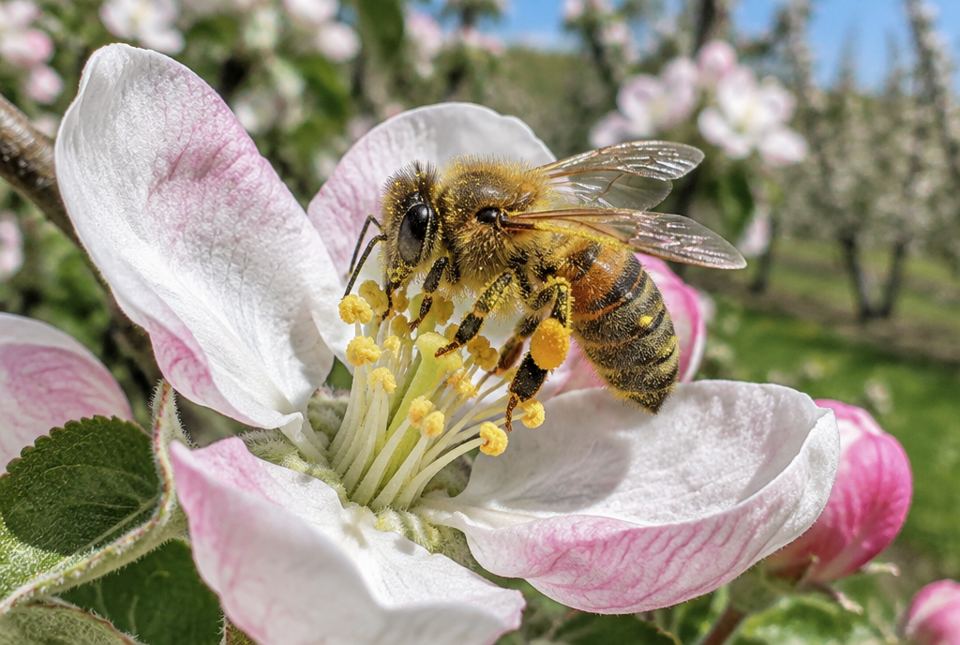 This bee is drinking nectar from an apple blossom. Pollen sticks to its fuzzy body and helps the tree make apples. AI-generated imageAs a bee drinks nectar, pollen sticks to its fuzzy body. At the next flower, the pollen rubs off, and that helps the plant make fruit and seeds.
Living things help meet each other's needs
Living things depend on each other. Here are some ways:
| Living thing | Helps... | How |
|---|
| 🌳 trees | birds, squirrels, raccoons | give shelter (nests, holes) and food (seeds, nuts) |
| 🌱 plants | people and animals | give food and help keep the air clean |
| 🐝 bees | flowers and fruit plants | pollinate them so they make fruit and seeds |
| 🐦 birds | plants | spread seeds when they eat berries and drop the seeds in new places |
| 🐄 cows and 🐔 chickens | people | give milk and eggs (food) |
| 🧑 people | pets, gardens and wild places | give pets food, water and shelter; water gardens; plant trees |
People need plants and animals
People use plants and animals every day:
- Food: fruits, vegetables, grains, milk, eggs, fish, meat
- Shelter: wood from trees to build houses
- Clothing: cotton from plants, wool from sheep
- Treats: maple syrup from sugar maple trees!
Because we need them, we must take care of them too.
The Three Sisters
The Haudenosaunee (Iroquois) and other First Nations peoples have grown corn, beans and squash together for a very long time. They call these plants the Three Sisters. The sisters help each other grow:
- 🌽 The tall corn gives the beans a pole to climb.
- 🫘 The beans add nutrients to the soil that help the corn and squash grow.
- 🎃 The big squash leaves shade the ground. This keeps the soil damp and blocks weeds.
Together, the Three Sisters also give people healthy food. This knowledge is an important contribution to growing food that we can still learn from today.
Just for funWhy do bees have sticky hair?
Because they use honey-combs!
What if something disappeared?
Because living and non-living things are connected, losing one thing can cause problems for many others. Different people and animals would feel the change in different ways. That is called looking at different points of view.
Worked exampleLet's think about losing the maple trees
Imagine all the sugar maple trees in a forest were cut down. What problems could happen? Think from different points of view.
- A bird's point of view: "My nest was in that tree! Now I have no shelter."
- A squirrel's point of view: "I ate the seeds. Now I need to find other food."
- A maple syrup farmer's point of view: "I make syrup from the sap. Now I can't make syrup or earn money."
- A family's point of view: "We loved walking there. Now there's no shade, and no colourful leaves in the fall."
Losing the maple trees would hurt birds, squirrels, farmers and families in different ways. That's why we should cut trees carefully and plant new ones.
Worked exampleLet's think about losing clean water
What if a town's lake became too dirty to use?
- People: could not drink the water, swim or fish there.
- Fish and frogs: could get sick, or have nowhere to live.
- Birds like loons that eat fish: would lose their food.
Clean water is a non-living thing that people and animals all need. Losing it would cause problems for everyone.
Hands-on activityFood web string game
You need: a ball of yarn or string, and 3 or more people (or stuffed animals!).
- Each person is a living or non-living thing: sun, maple tree, squirrel, owl, bee, flower, water, person. Make name cards.
- Start with the sun. Hold the end of the yarn and pass the ball to something that needs the sun ("The tree needs the sun for light!").
- That person holds on and passes the ball to something connected to them ("The squirrel eats seeds from the tree!").
- Keep going until everyone is connected. You made a web!
- Now someone lets go ("The tree is cut down"). Who feels the yarn go loose? Those are the living things that are affected.
Talk about it: What could we do to help?
Your turn
1How does a bee help a flower?
It carries pollen from flower to flower (pollinates), which helps the plant make seeds and fruit.
2How does a tree help a bird?
It gives the bird shelter (a place for its nest) and sometimes food (seeds, bugs on the bark).
3Name 2 things people get from plants.
Examples: food (apples, carrots, bread), wood for houses, cotton for clothes, maple syrup. Any 2.
4What are the Three Sisters?
Corn, beans and squash, planted together by the Haudenosaunee and other First Nations.
5How does the corn help the beans?
The tall corn stalk gives the bean vine something to climb.
6Name one way you help a living thing meet its needs.
Answers will vary. Example: "I give my dog water." "I water the plants." "I fill the bird feeder in winter."
More practice: warm-up
1What do bees get from flowers?
Food (nectar and pollen).
2What do we get from sugar maple trees?
Maple syrup (from the sap). Also wood and shade.
3What do we get from chickens?
4Do living things need each other?
5Name a pet and one thing it needs from you.
Answers will vary. Example: A cat needs food (or water, a warm place, care).
More practice: on your own
1How do squash leaves help the other two sisters?
The big leaves shade the ground, which keeps the soil damp and blocks weeds.
2A robin eats berries. Later the seeds drop in a new place. How does this help the plant?
The seeds are spread to a new place where they can grow into new plants with more space.
3If there were no bees, why might we have fewer apples?
Bees pollinate apple flowers. Without pollination, many flowers would not make fruit.
4How do people help wild animals in winter?
Examples: fill bird feeders, leave brush piles for shelter, keep their habitats clean. (Wild animals like deer should not be fed by people, so bird feeders are the best example.)
5A wolf eats rabbits. How does the wolf depend on the rabbit?
The rabbit is the wolf's food.
Challenge
1Imagine all the bees disappeared. Describe the problem from 2 points of view.
Examples: A farmer: "My apple trees and blueberry bushes won't make as much fruit." A family: "There would be fewer fruits and vegetables at the store." A flower: "Without bees, I can't make as many seeds."
2Why do you think it is smart to plant the Three Sisters together instead of in separate rows?
Because they help each other: the corn holds up the beans, the beans feed the soil, and the squash keeps the soil damp and stops weeds. Together they grow better.
3A town plans to cut down a forest to build a parking lot. What could the town do so animals still have homes?
Answers will vary. Examples: keep part of the forest, plant new trees somewhere else, build in a place with no trees, or make a smaller parking lot.
Quiz
1. How do bees help flowers?
2. What are the Three Sisters?
3. Which is an example of a living thing giving another living thing shelter?
4. If all the trees in a forest were cut down, who could be affected?
5. What does the corn do for the beans?
6. Which is a way people help other living things?
Big idea: Living things depend on each other for food, shelter and more. People depend on plants and animals and have a responsibility to care for them. Losing something from an environment affects many living things, in different ways for different people (B1.1).
About the Three Sisters: Corn, beans and squash were grown together by the Haudenosaunee and many other Indigenous peoples. It is an example of Indigenous knowledge contributing to science and farming (A3.3). Present it as living knowledge that is still practised today, not only as something from the past.
Common difficulties:
- Thinking only animals help plants or only people help animals. Use many examples in both directions.
- Only seeing one point of view. Ask, "How would the bird feel? The farmer? Your family?"
How to help: Plant beans in a pot with a stick to climb. Watch bees in a garden from a safe distance. Talk about where your dinner came from: which plant or animal helped feed you?